
Care-E-Well Insights
Do You Need to Sterilise Bottles for Formula Feeding?
Do you need to sterilise bottles for formula feeding? Learn why cleaning alone is not enough and how to sterilise equipment safely.
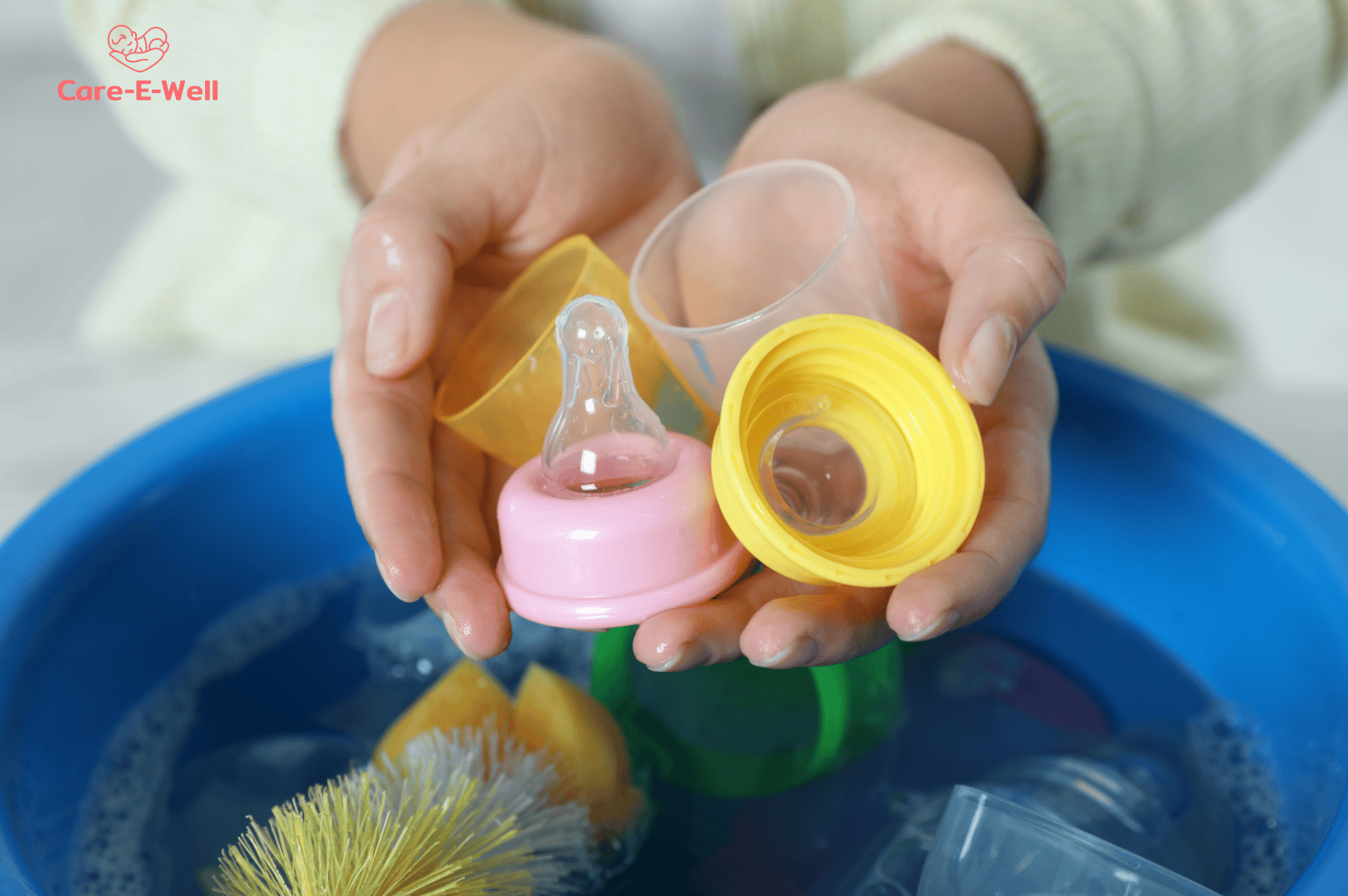
Yes. When you use bottles for infant formula, careful cleaning followed by sterilising is an important part of safer feeding during infancy. UNICEF UK’s current bottle-feeding guidance specifically advises parents to clean and sterilise all feeding equipment because milk residue and contaminated equipment can contribute to infection risk.
Cleaning and sterilising are not the same step. Washing removes milk, grease and visible contamination; sterilising then reduces microorganisms on equipment that has already been thoroughly cleaned. A dishwasher can clean suitable bottle parts, but UNICEF UK notes that it does not sterilise them.
Clean first, sterilise second. Sterilising a bottle that still contains dried milk or residue does not replace thorough washing.
Why do formula-feeding bottles need such careful hygiene?
Milk is a good environment for bacterial growth, and bottle systems have several surfaces where milk can remain: the bottle, teat, retaining ring, valve, vent, cap and any anti-colic components. Research has found that apparently cleaned bottles can retain organic residue or microorganisms when cleaning is incomplete.
Powdered infant formula adds another reason to take hygiene seriously because the powder itself is not sterile. Harmful bacteria such as Cronobacter or Salmonella can rarely be present in powdered formula, while additional contamination can come from hands, work surfaces or feeding equipment during preparation.
Ready-to-feed liquid formula is commercially sterile before opening, but the bottle, teat and other equipment that touch it can still introduce contamination. UNICEF UK therefore advises sterilising feeding equipment even when ready-to-feed formula is used.
What is the difference between cleaning and sterilising?
Cleaning physically removes milk residue and much of the microbial contamination from the bottle. Sterilising is a separate process used after cleaning to reduce remaining microorganisms further.
Skipping the cleaning stage matters because dried milk and biofilm-like residue can make bottle surfaces harder to decontaminate. Studies of bottle hygiene have shown that effective washing and scrubbing are central to removing contamination before any disinfection step.
A good routine is therefore simple: dismantle, wash, rinse, sterilise, then keep the equipment protected until needed.
How should you clean bottles before sterilising?
- Wash your hands with soap and water.
- Take the bottle completely apart, including the teat, ring, cap, valve and removable vent pieces.
- Check bottles and teats for cracks, splits, clouding or damage.
- Wash every part in hot, soapy water.
- Use a clean bottle brush and teat brush to reach internal surfaces and narrow areas.
- Rinse all parts in clean, cold running water.
- Sterilise the clean equipment using an appropriate method.
Complex bottle designs can require more attention because small valves, straws and vents create extra surfaces to clean. Follow the bottle manufacturer’s instructions for dismantling and make sure every component is compatible with your chosen sterilising method.
If you cannot see or reach a part well enough to remove milk residue, check the manufacturer’s cleaning instructions rather than assuming steam or boiling will compensate.
Does a dishwasher sterilise baby bottles?
Not according to UNICEF UK’s bottle-feeding guidance. A dishwasher can clean bottle-feeding equipment when the parts are dishwasher-safe, but the guidance states that washing in a dishwasher does not count as sterilising.
If you use a dishwasher, dismantle the bottle fully, follow the manufacturer’s dishwasher instructions and then use a separate sterilising method appropriate for the equipment.

Which sterilising methods can you use?
Common options include steam sterilising, cold-water sterilising solution and boiling. None is inherently “best” for every family. The right method is one that is suitable for your equipment, used correctly and easy enough to repeat reliably.
Steam sterilising
Electric steam sterilisers and microwave steam sterilisers use heat and steam. UNICEF UK advises following the manufacturer’s instructions closely because devices differ in loading, water volume, cycle length and how long items remain sterile after the cycle.
Make sure all pieces are positioned so steam can reach the relevant surfaces. Do not overload the unit, and only use components that the bottle manufacturer says are compatible with steam or microwave sterilising.
Cold-water sterilising
For cold-water sterilising, use a product made for infant feeding equipment and follow its instructions. UNICEF UK advises leaving the equipment in the solution for at least 30 minutes, keeping every item completely submerged and making sure no air is trapped inside bottles or teats.
Its guide also advises changing the sterilising solution every 24 hours. Keep the equipment under the solution with the supplied cover or device until you need it, according to the steriliser instructions.
Sterilising by boiling
Boiling is a low-equipment option when every item is safe to boil. UNICEF UK advises keeping all feeding equipment submerged in boiling water for at least 10 minutes.
Teats may deteriorate faster with repeated boiling, so inspect them frequently. Never leave a pan of boiling water unattended, and keep hot water well away from children.
Only boil bottles, teats and accessories if the manufacturer confirms they are safe for boiling. Heat can damage unsuitable plastics, valves or other components.
What should you do with equipment after sterilising?
Avoid touching surfaces that will contact milk or the baby’s mouth. If possible, leave sterilised equipment assembled or stored according to the steriliser manufacturer’s instructions until needed.
Do not put a sterilised teat or retaining ring directly on an unclean work surface. If a sterilised item becomes contaminated before use, clean and sterilise it again rather than wiping it quickly with a kitchen towel.
Hands and preparation surfaces matter too. Sterile equipment can become contaminated again during formula preparation if it is handled with unwashed hands or placed on a dirty surface.
Do you still need to sterilise bottles used for ready-to-feed formula?
Yes. Ready-to-feed formula is sterile until its container is opened, but the feeding equipment is not automatically sterile. UNICEF UK’s guidance explicitly states that feeding equipment still needs to be sterilised when ready-to-feed formula is used.
Once the formula has been poured into a bottle, normal hygiene rules apply. Hold the bottle during the feed, discard milk left after the baby has fed and clean the equipment thoroughly after use.
Do you need to sterilise a brand-new bottle before the first use?
A new bottle may look clean, but it has been manufactured, packaged, transported and handled before it reaches your home. Before first use, wash every part according to the manufacturer’s instructions and sterilise it using a compatible method.
The same applies to replacement teats, valves and bottle accessories. “New” is not the same as ready for direct contact with infant milk.
What if a bottle has been left with old formula inside?
Empty it promptly and wash it thoroughly. Formula residues support bacterial growth, and dried milk becomes harder to remove from narrow areas and valves.
If residue cannot be fully removed, or if the bottle or teat remains damaged, heavily scratched or difficult to clean, replacing the affected part is safer than repeatedly sterilising visible residue.
Does sterilising remove the need for safe formula preparation?
No. Bottle hygiene is one part of a wider safety system. Powdered infant formula is not sterile, so safe preparation also includes clean hands and surfaces, correctly measuring water and powder, using an appropriate hot-water reconstitution method, cooling the feed safely and discarding leftovers.
A sterilised bottle cannot make incorrectly prepared formula safe. Likewise, carefully prepared formula can be contaminated if it is poured into inadequately cleaned feeding equipment.

What if you are travelling?
Travel can make bottle hygiene harder because access to a clean sink, safe water and sterilising equipment may be limited. Plan the method before leaving home rather than improvising when a baby is already hungry.
Commercially sterile ready-to-feed formula can simplify the formula-preparation step, but you still need clean, sterilised feeding equipment. Single-use sterile feeding equipment may be useful in some situations if it is intended for infant feeding and used exactly as directed.
Never rely on rinsing a used bottle with a little water and refilling it repeatedly during the day.
What if your baby is premature or medically vulnerable?
Premature infants, very young newborns and babies with impaired immunity can be more vulnerable to serious infection. Their feeding-equipment and formula-preparation plan may need to be more conservative than a general household routine.
If your baby was discharged from neonatal care or has a condition that affects infection risk, follow the hospital or clinical team’s instructions for equipment, formula type and preparation rather than changing the routine independently.
Common sterilising mistakes to avoid
- Sterilising without first removing milk residue
- Leaving bottles partly assembled during washing so hidden surfaces stay dirty
- Assuming a dishwasher automatically sterilises
- Touching the inside of a sterilised teat or bottle with unwashed hands
- Placing sterile parts on an unclean worktop
- Using a cold-water solution for less time than instructed
- Failing to keep items fully submerged during cold-water sterilising
- Boiling equipment that is not designed to be boiled
- Continuing to use cracked teats or badly damaged bottle parts
Frequently asked questions
Can I just rinse a bottle immediately after a feed?
Rinsing can stop milk from drying onto the bottle, but it is not a complete cleaning or sterilising process. Wash with hot, soapy water, rinse thoroughly and then sterilise.
Do I need to sterilise the bottle brush?
Keep the brush clean, allow it to dry between uses and use it only for feeding equipment. Follow the brush manufacturer’s care instructions. If it becomes visibly soiled, damaged or difficult to clean, replace it.
Is steam better than boiling?
Both can be effective when used correctly with compatible equipment. Steam devices may be more convenient, while boiling requires less specialised equipment. Correct technique matters more than choosing the most expensive method.
Can I sterilise bottles in advance?
Follow the steriliser manufacturer’s instructions about storage after a completed cycle. The key is keeping sterile surfaces protected from handling and environmental contamination until use.
The key takeaway
Do you need to sterilise bottles for formula feeding? Yes—cleaning and sterilising are separate safety steps, and current UNICEF UK bottle-feeding guidance advises both for feeding equipment used with infant formula.
Build a routine you can repeat reliably: dismantle every part, wash away all milk residue, rinse, sterilise with a compatible method and protect the equipment until the next feed. Good bottle hygiene works alongside—not instead of—safe formula preparation.
Sources and references
- UNICEF UK Baby Friendly Initiative. Guide to Bottle Feeding: How to Prepare Infant Formula and Sterilise Bottles. https://www.unicef.org.uk/babyfriendly/wp-content/uploads/sites/2/2022/10/Bottle-feeding-leaflet.pdf
- World Health Organization. Safe Preparation, Storage and Handling of Powdered Infant Formula: Guidelines. https://www.who.int/publications/i/item/9789241595414
- Redmond EC, Griffith CJ, Riley S. Contamination of bottles used for feeding reconstituted powdered infant formula and implications for public health. https://doi.org/10.1177/1757913908101606
- Ma L, Zhang G, Swaminathan B, et al. Efficacy of Protocols for Cleaning and Disinfecting Infant Feeding Bottles in Less Developed Communities. https://doi.org/10.4269/ajtmh.2009.81.132
- Rothstein JD, Mendoza ALL, Cabrera L, et al. Household Contamination of Baby Bottles and Opportunities to Improve Bottle Hygiene in Peri-Urban Lima, Peru. https://doi.org/10.4269/ajtmh.18-0301
- Blackshaw K, Valtchev P, Koolaji N, et al. The risk of infectious pathogens in breast-feeding, donated human milk and breast milk substitutes. https://doi.org/10.1017/S1368980020000555
- Cheng H, Rossiter C, Size D, et al. Comprehensiveness of infant formula and bottle feeding resources: A review of information from Australian healthcare organisations. https://doi.org/10.1111/mcn.13309
- Calamusa G, Valenti RM, Guida I, et al. A survey on knowledge and self-reported formula handling practices of parents and child care workers in Palermo, Italy. https://doi.org/10.1186/1471-2431-9-75
- Kent RM, Fitzgerald GF, Hill C, Stanton C, Ross RP. Novel Approaches to Improve the Intrinsic Microbiological Safety of Powdered Infant Milk Formula. https://doi.org/10.3390/nu7021217
Did this Insight help?
A little love for something worth reading.


