
Care-E-Well Insights
Sugar for Babies: What Parents Need to Know
Learn which sugars babies need, why added and free sugars should stay low, and how to spot hidden sweetness in everyday baby foods.
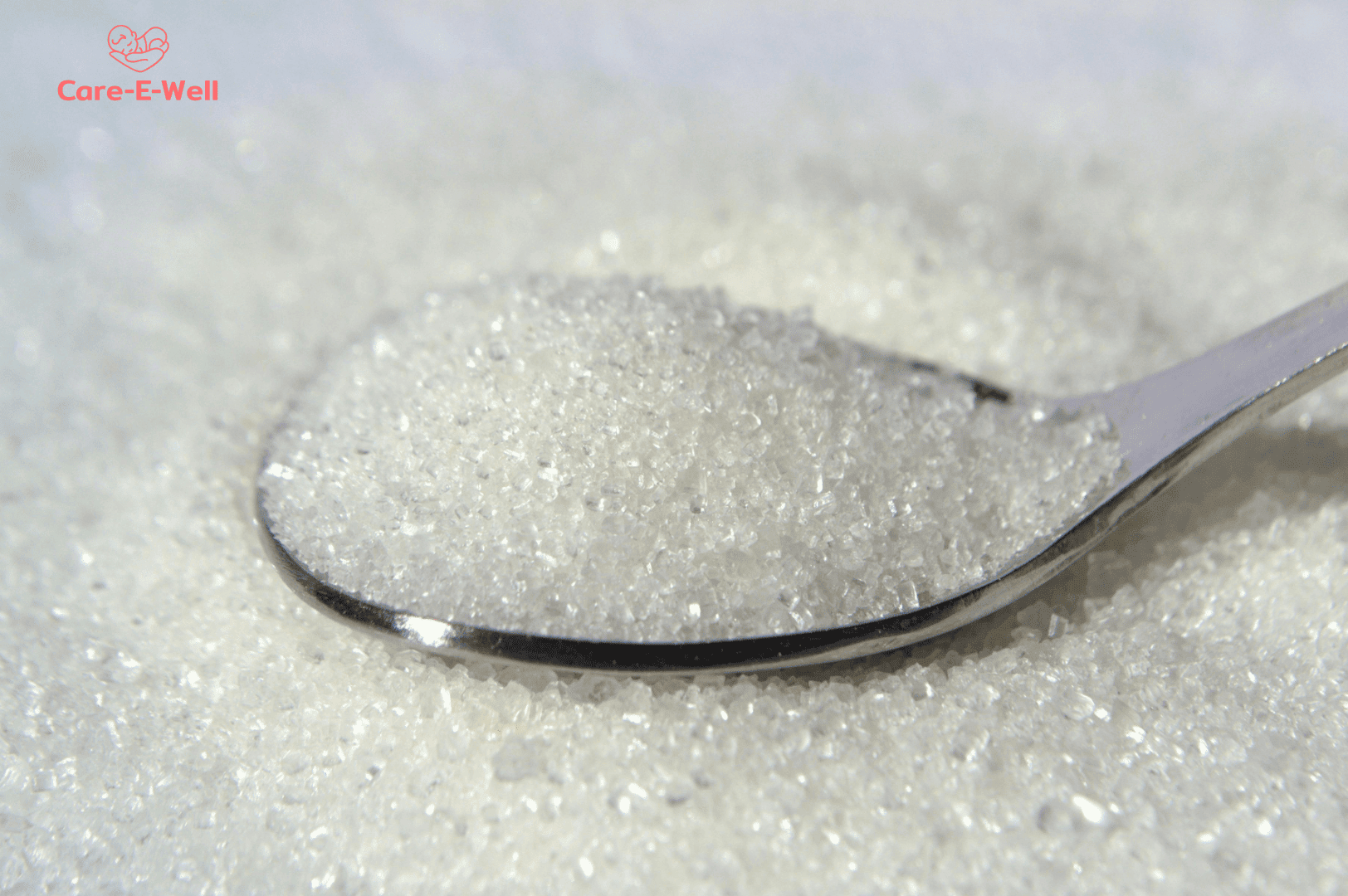
Babies do not need added sugar in complementary foods. WHO advises that sugars should not be added to complementary foods, and EFSA concludes that added and free sugar intake should be as low as possible within a nutritionally adequate diet. That does not mean babies must avoid naturally sweet foods such as fruit or plain milk.
The important distinction is between sugars naturally contained inside whole foods and sugars that are added or become “free” in products such as juice, syrups and honey. A banana and a sweetened fruit drink are not nutritionally equivalent just because both taste sweet.
You do not need to make baby food taste sweeter so a baby will accept it. Repeated exposure to ordinary foods helps babies learn a wide range of flavours.
Do babies need sugar?
Babies need carbohydrate for energy, and many nutritious foods naturally contain sugars or starches. They do not need table sugar, syrups or other added sweeteners to meet this requirement.
Breast milk and infant formula already contain carbohydrate. As complementary feeding expands, foods such as fruit, vegetables, grains, pulses and dairy where appropriate provide additional carbohydrate alongside vitamins, minerals, fibre, fat and protein.
What are added, free and total sugars?
EFSA distinguishes several categories. Added sugars are sugars added during food preparation or processing. Free sugars include added sugars plus sugars naturally present in honey, syrups, fruit juices and juice concentrates. Total sugars include all sugars, including those naturally present within intact fruit, vegetables and milk.
This distinction matters because advice to limit free or added sugars does not mean parents should fear every gram of sugar shown on a nutrition label.
Should parents avoid adding sugar to baby food?
Yes as a default. WHO’s current healthy-diet guidance states that salt and sugars should not be added to complementary foods. There is no nutritional need to sweeten porridge, yoghurt, fruit, vegetables or other baby meals with table sugar.
If a baby initially refuses a food, repeated calm exposure is preferable to automatically sweetening it. Acceptance changes over time and individual preferences vary.
What is wrong with added sugar?
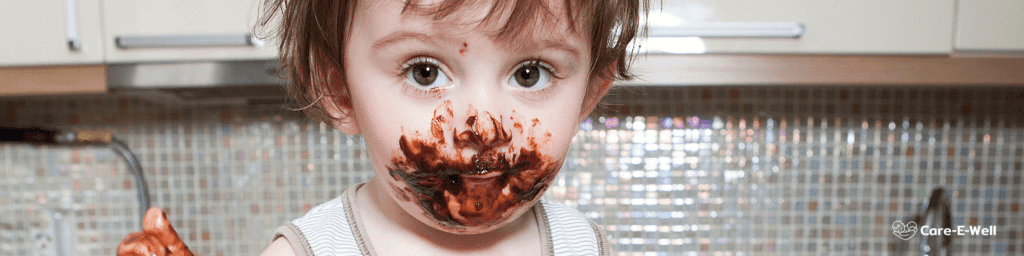
Added and free sugars can increase energy intake without adding many essential nutrients. They can also displace foods that provide iron, protein, healthy fats and other nutrients that matter during rapid growth.
Free-sugar exposure is also strongly relevant to dental caries. EFSA’s 2022 sugars assessment found the evidence supported keeping added and free sugar intake as low as possible, while a science-based tolerable upper intake level could not be established.
Does sugar make babies prefer sweet foods?
Humans show an early preference for sweet tastes, but experience also shapes preferences. Repeated exposure to very sweet foods can influence the flavour environment a child becomes familiar with.
The evidence does not mean one sweet food permanently changes a child’s palate. Rather, feeding patterns matter. Research on toddler diets and commercial baby foods shows that frequent exposure to added or free sugars can reinforce sweet taste patterns (Fidler Mis et al., 2017; Masztalerz-Kozubek et al., 2020).
Is fruit too sugary for babies?
No. Whole fruit is a nutritious complementary food when prepared in an age-appropriate texture. Its sugars are contained within a food matrix that also provides fibre, water, micronutrients and other components.
Fruit juice is different because juicing releases sugars from the cellular structure and removes much of the intact fibre. EFSA classifies sugars in fruit juice and juice concentrates as free sugars.
What about fruit purée?
Fruit purée can be useful, especially during texture progression, but it should not dominate the diet. Babies also need savoury flavours, iron-rich foods and increasingly varied textures.
Commercial pouches can be heavily fruit-based and taste very sweet even when the label says “no added sugar.” “No added sugar” does not necessarily mean “no free sugar” or “low sugar.”
Is honey a healthier sweetener?
No sweetener is necessary for a baby. Honey is also classified as a source of free sugars, so it does not become a preferable everyday sweetener simply because it is less processed than table sugar.
Maple syrup, agave syrup, date syrup, rice syrup and similar products may sound less processed than table sugar, but they still contribute free or added sugars.
What about sweetened yoghurt?
Plain unsweetened yoghurt can provide protein and calcium where dairy is appropriate. Flavoured yoghurts can contain considerable added sugar, so compare ingredient lists and labels.
If a baby enjoys plain yoghurt with mashed fruit, there is no need to add sugar. The goal is not to recreate the sweetness level of adult desserts.
Are baby biscuits and snacks healthy because they are marketed for babies?
Not necessarily. Research in multiple countries has found that some commercial infant and toddler foods contain free sugars, sweetening ingredients or predominantly sweet flavour profiles.
Padarath et al. found free sugars in a substantial proportion of commercial complementary foods in New Zealand, and Bassetti et al. documented nutrition concerns in commercially produced complementary foods in several countries. Marketing claims should not replace label reading.
Can a baby have birthday cake or dessert?
An occasional taste near the end of infancy is different from daily added-sugar exposure. The strongest public-health concern is the habitual pattern: sweet drinks, sweet snacks, sweetened cereals and desserts offered repeatedly.
For babies under one, there is no nutritional reason to introduce sugary treats. Families can celebrate without making sweet foods a routine expectation.
What should babies drink?
During the first year, breast milk or infant formula remains central. Water can be introduced in small amounts with complementary foods. Sweetened drinks are unnecessary.
Drinks can deliver sugar quickly and repeatedly, and sipping them over time also increases contact between sugar and teeth once teeth erupt.
Sugar and dental health
Dental caries is strongly associated with free-sugar exposure. A 2023 birth-cohort study found that children with persistently higher free-sugar intake patterns had more dental caries than children with lower intake patterns (Ha et al., 2023).
Reducing free sugars is only one part of oral health, but it is a modifiable feeding factor. Avoid putting sweet drinks in bottles or cups for prolonged sipping.
How to reduce added sugar in everyday baby food
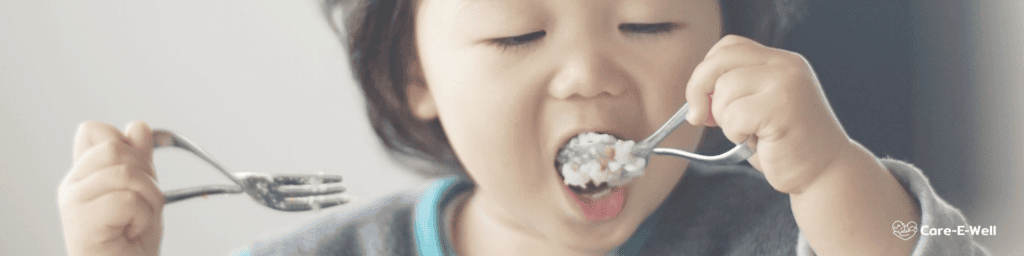
- Choose plain porridge or cereal without added sugar where possible.
- Offer whole fruit rather than juice.
- Choose plain yoghurt rather than sweetened yoghurt.
- Read ingredient lists for sugar, syrup, honey, juice concentrate and similar sweetening ingredients.
- Use fruit for flavour when appropriate rather than adding table sugar.
- Keep sweet biscuits, desserts and sweetened drinks out of the everyday routine.
- Offer savoury foods repeatedly so the baby experiences many flavours, not only sweet ones.
Do “natural” sugars count?
The word natural can be misleading. Sugar naturally locked inside whole fruit is not treated the same way as free sugar in honey, syrup or fruit juice.
A product sweetened with fruit juice concentrate may still contribute free sugars even if it contains no white table sugar.
What if my baby already eats sweet foods?
There is no need for guilt or a dramatic reset. Change the pattern gradually. Replace sweetened products with less sweet versions, offer water instead of sweet drinks and continue exposing the baby to a broad range of foods.
Children can learn new preferences through repeated experiences. One previous food choice does not determine their future diet.
Frequently asked questions
Can babies eat foods with naturally occurring sugar?
Yes. Whole fruit, vegetables and plain dairy where appropriate can naturally contain sugars and still be nutritious foods.
Is “no added sugar” always a good baby-food label?
It can be useful, but check the ingredient list. Products can contain free sugars from juice, concentrates or other sweet ingredients without added table sugar.
Should babies have fruit juice?
Whole fruit is generally a better way to offer fruit because it retains its structure and fibre. Juice contributes free sugars and is not needed for routine infant hydration.
Is brown sugar better than white sugar for babies?
No. Brown sugar is still added sugar and offers no meaningful advantage that makes it necessary in baby food.
Conclusion
Sugar for babies is mainly about avoiding unnecessary added and free sugars, not avoiding naturally sweet nutritious foods. Keep complementary meals varied, do not add sweeteners, choose water rather than sweet drinks, and let babies learn the natural flavours of food.
Sources/References
- World Health Organization. Healthy diet. https://www.who.int/news-room/fact-sheets/detail/healthy-diet
- World Health Organization. WHO Guideline for complementary feeding of infants and young children 6–23 months of age. https://www.who.int/publications/i/item/9789240081864
- European Food Safety Authority. Added and free sugars should be as low as possible. https://www.efsa.europa.eu/en/news/added-and-free-sugars-should-be-low-possible
- European Food Safety Authority. Tolerable upper intake level for dietary sugars. https://www.efsa.europa.eu/en/plain-language-summary/tolerable-upper-intake-level-dietary-sugars
- Fidler Mis N, Braegger C, Bronsky J, et al. Sugar in Infants, Children and Adolescents. DOI: https://doi.org/10.1097/MPG.0000000000001733
- Masztalerz-Kozubek D, Zielinska-Pukos MA, Rust P, et al. The Use of Added Salt and Sugar in the Diet of Polish and Austrian Toddlers. DOI: https://doi.org/10.3390/ijerph17145025
- Padarath S, Gerritsen S, Mackay S, et al. Nutritional Aspects of Commercially Available Complementary Foods in New Zealand Supermarkets. DOI: https://doi.org/10.3390/nu12102980
- Bassetti E, Zehner E, Mayhew S, et al. Nutrient profiles of commercially produced complementary foods available in Cambodia, Indonesia and the Philippines. DOI: https://doi.org/10.1017/S1368980022001483
- Ha D, Huy NV, Bell L, et al. Trajectories of child free sugars intake and dental caries. DOI: https://doi.org/10.1016/j.jdent.2023.104559
Did this Insight help?
A little love for something worth reading.


