
Care-E-Well Insights
Suspected Poisoning: What Parents Should Do First
Suspected poisoning in a child? Check breathing, avoid home antidotes, keep the product details and get poison-specific advice promptly.
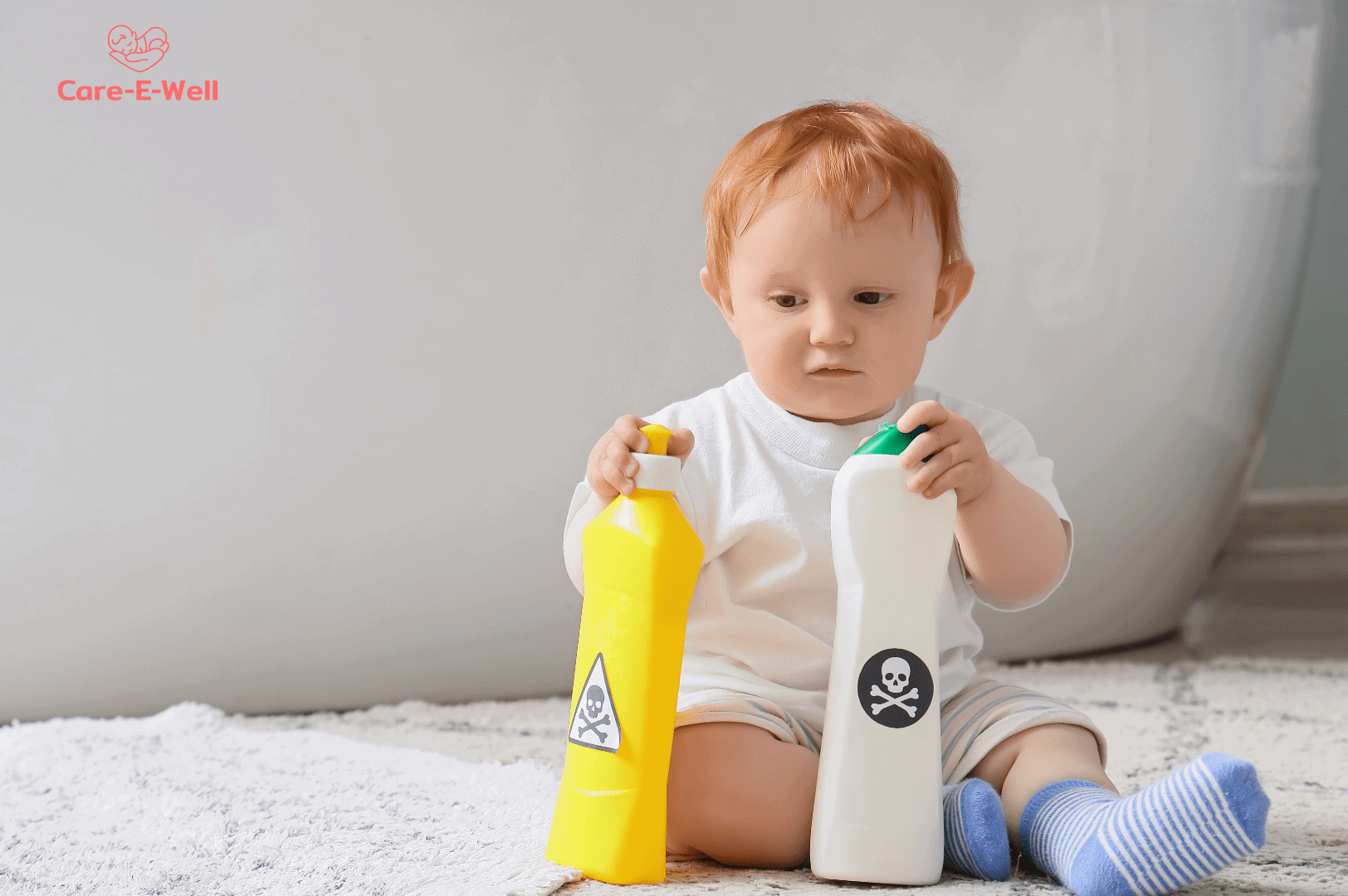
Suspected poisoning in a baby or child needs a calm, fast response even when the child looks completely well. First check responsiveness and breathing, remove the child from any ongoing exposure if you can do so safely, and contact your local poison information centre or emergency medical service for substance-specific advice. Do not wait for symptoms to appear before asking for help.
The most important rule is not to improvise a treatment. Do not make the child vomit, give ipecac, activated charcoal, milk, salt water, food, drinks or a household “neutraliser” unless a poison specialist or healthcare professional specifically tells you to. The right response depends on the substance, dose, route of exposure, formulation, time since exposure and the child’s size and condition.
With suspected poisoning, information is part of first aid. Keep the package or container, note the time and possible amount, and get expert advice rather than trying a home antidote.
What should you do first after suspected poisoning?
Start with the child, not the product label. If the child has collapsed, is having a seizure, is extremely drowsy or confused, or is struggling to breathe, treat the situation as a medical emergency.
- Check whether the child responds normally.
- Check whether breathing is normal.
- Move the child away from the source if you can do this without exposing yourself.
- Remove remaining tablets, liquid, plants or other material from the child’s reach.
- Keep the original container, blister pack, product label or a photo of it.
- Note what may have been taken, the approximate amount, the time and any symptoms.
- Contact a poison information centre or emergency medical service promptly for individual advice.
Call emergency services immediately for unconsciousness, abnormal breathing, a seizure, collapse, severe confusion, marked drowsiness, or any rapidly worsening condition.
Why should you call even if the child has no symptoms?
Some toxic exposures cause symptoms quickly, while others have a delay. A child may initially look normal after taking a medicine or chemical and still require observation, testing or treatment.
Toxicology decisions are often based on the exact substance and dose rather than symptoms alone. Evidence-based out-of-hospital guidelines for medicines such as paracetamol, salicylates, beta-blockers and antidepressants use different dose thresholds and referral rules. That is why a generic “wait and see” approach is unsafe.
When the amount is uncertain, tell the poison specialist that it is uncertain rather than trying to estimate reassuringly. Missing tablets, an open bottle or a partially empty cleaning product may be the only clues.
Should you make a child vomit after swallowing something poisonous?
No. Routine induction of vomiting is not recommended. Syrup of ipecac was once kept in some homes, but toxicology guidance moved away from home use because vomiting does not reliably improve outcomes and can create additional problems.
Vomiting can increase aspiration risk, delay more useful treatment and be particularly dangerous with corrosive substances or hydrocarbons. Never put fingers or objects into a child’s throat to trigger vomiting.
Do not induce vomiting after a suspected poisoning unless a qualified toxicology professional gives a very specific instruction—which is uncommon in modern poisoning care.
Should you give activated charcoal at home?
Not routinely. Activated charcoal can bind some poisons in the gut, but it does not work for every substance and can be harmful when given to a child who is drowsy, vomiting or unable to protect the airway.
Modern toxicology reviews emphasise selective use rather than automatic decontamination. The decision depends on what was swallowed, how much, when it happened and whether the airway is protected. Activated charcoal therefore belongs under professional guidance, not as a standard family first-aid treatment.

What about milk, water, food or a household antidote?
Do not automatically give anything by mouth. Advice varies by substance. Giving a drink may be harmless in one situation and unhelpful or unsafe in another, especially if the child could need sedation, endoscopy or another urgent procedure.
Attempts to “neutralise” acids with alkalis or alkalis with acids are particularly inappropriate. Chemical reactions can generate heat and cause further tissue injury.
If a poison professional advises a specific small amount of fluid or another measure, follow that instruction. Otherwise, keep the child safe and get expert guidance.
What information will a poison specialist need?
- the child’s age and approximate weight
- the exact product or medicine name
- active ingredients and strength if shown
- whether the product is a liquid, tablet, capsule, pod, powder or other form
- the possible amount involved
- the time of the exposure
- whether it was swallowed, inhaled, splashed in the eyes or on the skin
- any symptoms already present
- medicines or medical conditions that could affect risk
Bring the container or a clear photograph with you if the child needs assessment. Do not transfer an unknown chemical into an unlabelled bottle for transport.
What if medicine is missing?
Treat an unexplained missing medicine as a potential exposure until you have enough information to rule it out. Count remaining tablets only if doing so does not delay the call for advice.
Adult medicines can be dangerous to small children in relatively small amounts. Extended-release products and concentrated liquids can also behave differently from ordinary formulations, so the brand, strength and dosage form matter.
What should you do if poison gets on the skin?
Protect yourself first. Remove the child from the source and take off contaminated clothing or jewellery if this can be done safely. For many chemical skin exposures, prompt rinsing with plenty of clean water is an important first step while professional advice is being obtained.
Do not scrub aggressively or apply another chemical to “cancel out” the first one. Powders may need to be brushed off before water is used, which is another reason to obtain product-specific guidance quickly.
Significant chemical burns, severe pain, widespread exposure or symptoms such as breathing difficulty, collapse or altered consciousness need urgent medical care.
What should you do if a substance gets in the eye?
Eye exposure to a potentially harmful chemical needs prompt irrigation. Begin rinsing with clean lukewarm water if this can be done safely and seek poison or medical advice at the same time.
Remove contact lenses if they come out easily, but do not delay irrigation while struggling with them. Do not put neutralising chemicals, creams or unprescribed eye drops into the eye.
Persistent pain, marked redness, vision change, difficulty opening the eye or exposure to a strong corrosive substance needs urgent assessment.
What about fumes or inhaled poisoning?
Move the child to fresh air only if you can do so without entering a dangerous environment yourself. Never enter a room filled with unknown gas, smoke or chemical vapour without appropriate protection.
Breathing difficulty, persistent coughing, wheeze, chest symptoms, headache, confusion, collapse or unusual sleepiness after inhalation exposure needs urgent medical evaluation. Carbon monoxide is particularly important because it cannot be identified reliably by smell and can affect several people in the same environment.
Are cleaning products always dangerous if swallowed?
Household products vary enormously. Some cause mainly irritation, while concentrated cleaners, dishwasher products, drain cleaners, descalers, solvents and other chemicals can cause corrosive or systemic injury.
Laundry and dishwasher detergent capsules deserve particular attention because concentrated liquid can be released suddenly and may affect the mouth, airway, lungs, eyes or gastrointestinal tract.
Do not judge the risk by how brightly coloured, familiar or “domestic” a product looks. Give the exact product information to a poison specialist.
What if the child swallowed a plant, berry or mushroom?
Identification matters. Do not rely on an image-search result or a family guess to decide that a plant or mushroom is safe. Keep a sample or take clear photographs of the whole plant and relevant leaves, berries or mushrooms if this can be done safely.
Remove loose plant material from the mouth, but do not make the child vomit. Contact a poison information service for identification and advice.
Which swallowed objects are poisoning or ingestion emergencies?
Some dangerous ingestions are not classic “poisons.” A swallowed button battery can cause severe electrical and caustic injury if it lodges in the oesophagus. Multiple high-powered magnets, or a magnet swallowed with a metallic object, can trap bowel walls between them and cause pressure necrosis, perforation or fistulas.
Suspected button-battery ingestion and suspected high-powered magnet ingestion need urgent medical assessment even when the child has no symptoms. Do not wait for pain or vomiting to start.
Sharp objects and objects causing choking, drooling, inability to swallow or breathing problems also require urgent evaluation.
Should you keep the child awake?
There is no universal rule to force a child to stay awake after every exposure. What matters is whether their alertness is normal and stable.
Unusual drowsiness, difficulty waking, confusion, poor coordination or reduced responsiveness can be poisoning symptoms. If these develop, seek emergency care rather than repeatedly stimulating the child at home.

What if the child vomits on their own?
Keep the airway safe and place a drowsy but normally breathing child on their side. Do not try to trigger further vomiting.
If possible, note what the vomit contains without handling it unnecessarily. Repeated vomiting, blood, breathing difficulty, severe abdominal pain or worsening drowsiness requires urgent medical advice.
Can you use an online toxicity calculator instead of calling?
Online information can explain general principles but should not replace individual toxicology advice in a real exposure. Small differences in formulation, concentration, sustained-release technology or the child’s weight can change the recommendation.
A poison information centre can also tell you whether home observation is reasonable, whether the child needs urgent assessment and what specific symptoms should trigger escalation.
A poison specialist may sometimes tell you that home observation is safe. That reassurance is most useful after the substance, dose, timing and child have been properly assessed.
How can you prevent repeat poisoning?
- keep medicines and chemicals locked or securely out of reach and sight
- store products in their original labelled containers
- never put chemicals into drink bottles or food containers
- use child-resistant packaging correctly, while remembering it is not child-proof
- avoid taking medicines in front of toddlers when possible
- return medicines to secure storage immediately after use
- keep handbags, visitors’ medicines and nicotine products inaccessible
- check floors and bedside areas for dropped tablets
- supervise children around cleaning products during use
Prevention needs to account for climbing and curiosity. A high shelf that a toddler can reach using a chair is not secure storage.
Frequently asked questions
My child only licked the product. Do I still need advice?
It depends on the product. A tiny taste of one substance may be low risk, while a small amount of another can matter. Use the product name and exposure details to obtain poison-specific advice.
Should I give milk after a child drinks a cleaning product?
Do not give milk automatically. Some exposure protocols may advise limited fluid, while others require the child to remain fasting. Contact a poison information service for the exact product.
Can I give activated charcoal because I already have it at home?
Not without professional advice. It does not bind all poisons and can be dangerous when aspiration is possible.
What if I do not know how much was swallowed?
Tell the poison specialist exactly that. They can use the maximum possible amount, package size, product concentration and child’s weight to assess risk.
When should I call emergency services instead of a poison centre?
Call emergency services for collapse, seizure, severe breathing problems, markedly altered consciousness, rapidly worsening symptoms, or another immediately life-threatening situation. In less acute cases, a poison information centre can guide the next step.
The key takeaway
With suspected poisoning, check responsiveness and breathing first, stop ongoing exposure safely and get substance-specific professional advice promptly. Do not induce vomiting or improvise with charcoal, milk, food or household antidotes. Keep the packaging and exposure details because treatment depends on the exact product, dose, route, timing and child. Emergency symptoms such as seizure, breathing difficulty, collapse or marked drowsiness need immediate emergency care, while button batteries and high-powered magnets require urgent assessment even before symptoms appear.
Sources and References
- Meyer S, Eddleston M, Bailey B — Unintentional Household Poisoning in Children
- Berg S, McCann SD — Pediatric Toxicology: An Updated Review
- Alanazi MQ, Al-Jeraisy MI, Salam M — Comparative outcome analysis of home-initiated non-medical interventions among toddlers with orally ingested substances
- Gosselin S, Høgberg LCG, Hoffman RS — Gut decontamination in the poisoned patient
- Olson KR — Activated Charcoal for Acute Poisoning: One Toxicologist’s Journey
- Dart RC, Erdman AR, Olson KR, et al. — Acetaminophen Poisoning: an Evidence-Based Consensus Guideline for Out-of-Hospital Management
- Chyka PA, Erdman AR, Christianson G, et al. — Salicylate poisoning: an evidence-based consensus guideline for out-of-hospital management
- Nelson LS, Erdman AR, Booze LL, et al. — Selective serotonin reuptake inhibitor poisoning: an evidence-based consensus guideline for out-of-hospital management
- Wax PM, Erdman AR, Chyka PA, et al. — Beta-blocker ingestion: an evidence-based consensus guideline for out-of-hospital management
- King KL, Smith R, Johnson G — Toxic household exposures in children
Did this Insight help?
A little love for something worth reading.


