
Care-E-Well Insights
Top Choking Hazards for Babies and How to Prepare Them Safely
See common choking hazards for babies and how to modify grapes, carrot, apple, nuts, sausage and other foods for safer feeding.
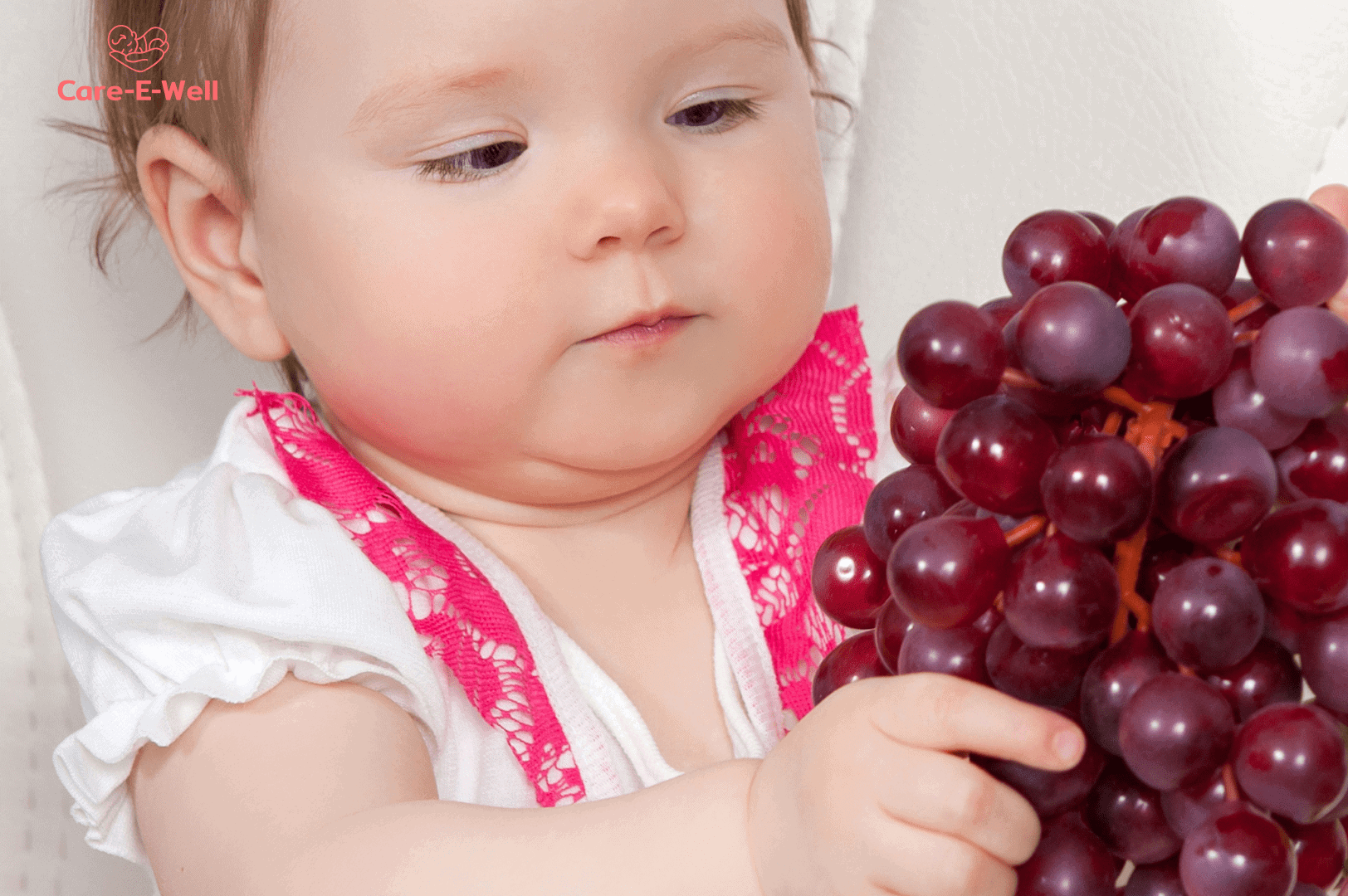
Many choking hazards are ordinary nutritious foods served in the wrong form. Whole grapes, raw carrot, hard raw apple, whole nuts and round pieces of sausage can fit or lodge in a young child’s airway. The solution is usually not to ban healthy foods forever, but to change their texture, shape or preparation.
Choking prevention also depends on how a baby eats. An upright, stable position, direct adult supervision and developmentally appropriate textures matter as much as the ingredient itself.
Think about four properties when preparing baby food: hard, round, smooth and difficult to break down. Changing those properties can make many foods easier to manage.
Why are babies more vulnerable to food choking?
Babies are learning to coordinate biting, chewing, tongue movement and swallowing while their airway is still small. They do not yet have the mature oral skills of an older child.
Foods that are small, firm, round or smooth can be especially problematic because they can enter and seal the airway. Foods that are hard to deform or break apart can also remain lodged.
Choking risk is not determined by whether a family follows baby-led weaning or spoon feeding. Research shows risky foods can be offered in both approaches.
Whole grapes and similar round fruits
WHO specifically identifies whole grapes as a choking hazard. Their smooth, round shape can closely match the airway.
For babies ready for finger foods, grapes should be modified rather than offered whole. Cutting them lengthwise changes the round shape; for young eaters, further lengthwise division can make pieces easier to manage.
Similar caution applies to small round fruits with firm flesh or stones. Remove pits completely and change the shape before serving.
Raw carrot
Raw carrot is another food specifically identified by WHO as a choking risk. A hard chunk can be difficult for a baby to break down even when several teeth have appeared.
Cook carrot until it is soft enough to squash easily. Depending on the baby’s skills, offer a large soft stick for grasping or smaller soft pieces for a more advanced pincer grasp.
Do not assume that thin raw carrot coins are safe simply because they are small. Coin shapes can still create an airway-sized piece.

Hard raw apple
Raw apple appears repeatedly in choking research and baby-led feeding studies as a food involved in concerning events. The problem is its firm texture and tendency to break into hard pieces.
Safer early options include cooked apple until soft or finely grated apple appropriate to the baby’s skills. As chewing competence improves, texture can gradually advance.
Large hard wedges are not automatically safe just because they are too big to swallow whole; babies can bite off pieces.
Whole nuts and hard seeds
Whole nuts are a well-recognised aspiration hazard in young children and appear frequently in choking literature. They should not be offered whole to babies.
Nuts can instead be ground finely into meals or powders and mixed into food. Smooth nut butter can also be used in an age-appropriate form, including for allergen introduction, but avoid serving a large sticky spoonful that is difficult to manage.
Peanut allergy prevention does not require giving whole peanuts. The allergenic food and the physical food form are two separate safety questions.
Sausage and other round slices
Coin-shaped pieces of sausage can form a round plug. If sausage is offered at all, change the geometry rather than cutting it into round discs.
Sausages and other processed meats can also be high in salt, so choking preparation is only one consideration. They do not need to be routine infant foods.
Whenever a cylindrical food is served, think about splitting it lengthwise so it is no longer a smooth round cross-section.
Popcorn and hard snack foods
Popcorn is light but has irregular hard fragments and should not be offered to babies. Hard sweets, brittle snack pieces and similarly hard foods also present avoidable choking risks.
Foods designed to dissolve can vary considerably in how quickly they actually soften. “Baby” branding does not replace caregiver judgement or supervision.
Firm chunks of meat or cheese
Meat and cheese can be valuable nutrient-dense foods, but preparation matters. Tough cubes of meat or firm rubbery cheese pieces can be difficult for a young baby to break down.
Offer meat cooked until tender and prepared in a form suited to the baby’s feeding stage, such as shredded, finely minced, mashed into another food or very soft graspable strips.
Cheese should be soft enough and shaped so the baby can manage it rather than presented as a hard compact cube.
Thick sticky foods
Thick foods that form a sticky mass can be difficult to clear from the mouth. Nut butter is a good example: a thin layer, stirred into porridge or loosened into another familiar food is easier to manage than a dense spoonful.
The same principle applies to very sticky pastes. Modify consistency so the food does not form a compact lump.
What about berries, peas and beans?
Soft foods are not automatically risk-free, but they can often be modified easily. Larger berries can be softened or squashed. Round foods can be flattened. Beans should be cooked until soft and can be lightly crushed for younger babies.
The goal is not to create a permanent list of “safe” and “unsafe” foods. The baby’s skills and the food’s current form both change over time.
How soft should finger food be?
For an early finger-food eater, a practical check is whether the food can be squashed easily between your fingers. The baby should not need adult-strength biting to break it down.
Softness is only one factor. The baby also needs a stable upright position and enough gross and fine motor control to bring food to the mouth and manage it.
Why shape matters
Round cross-sections deserve particular caution because they can correspond to the shape of the airway. Whole grapes, sausage coins and similar shapes are classic examples.
Lengthwise cutting, flattening, shredding, mashing or cooking can all change a food from a compact plug-like shape into something easier to manage.
As the child develops more mature chewing, the appropriate shape can progress too.

Supervision is part of food preparation
A perfectly prepared food does not make unsupervised eating safe. Babies should eat awake, upright and under direct adult supervision.
Avoid giving food in a moving car seat, while a baby crawls or walks around, or when the caregiver is too distracted to notice a choking event.
Every regular caregiver should know how to recognise choking and should learn infant choking first aid.
Does baby-led weaning increase choking risk?
A 2024 systematic review found no clear evidence that baby-led feeding causes more choking than traditional spoon feeding. Randomised research using a baby-led approach with explicit choking-risk education also did not show a higher choking rate.
The more consistent message across studies is that caregivers in all feeding styles sometimes offer high-risk foods. Education about preparation is therefore relevant for every family.
When should a baby’s feeding skills be assessed?
Seek professional advice if your baby repeatedly coughs or chokes during meals, has wet or gurgly breathing after swallowing, cannot progress to appropriate textures, has very prolonged meals, shows significant distress with eating or has poor growth.
Babies born prematurely or with neurological, airway, cardiac or developmental conditions may need individualized texture advice.
The key takeaway
The top choking hazards for babies are often foods that are hard, round, smooth or difficult to break down. Whole grapes, raw carrot, hard raw apple, whole nuts and coin-shaped sausage are important examples. Cook, soften, crush, grate, shred or change the shape to match your baby’s skills—and supervise every meal.
Frequently asked questions
Are whole grapes safe if I peel them?
Peeling does not remove the round shape. Change the shape by cutting lengthwise and adapt the piece further for your baby’s skills.
Can babies eat nuts?
Nut foods can be introduced in age-appropriate forms such as finely ground nuts or smooth nut butter mixed or spread thinly. Whole nuts are a choking hazard.
Is raw apple safe in a baby-led weaning strip?
Hard raw apple has been associated with choking concerns. Cook or otherwise modify it until your baby has more advanced chewing skills.
Can choking happen with spoon feeding too?
Yes. Choking prevention applies to every feeding method. Texture, position, supervision and food preparation all matter.
Sources/References
- World Health Organization — Complementary feeding
- Correia L et al. — Complementary feeding approaches and risk of choking: A systematic review
- Fangupo LJ et al. — A Baby-Led Approach to Eating Solids and Risk of Choking
- Cameron SL et al. — Development and pilot testing of Baby-Led Introduction to SolidS
- Boswell N — Complementary Feeding Methods—A Review of the Benefits and Risks
- Nichols BG et al. — Pediatric exposure to choking hazards is associated with parental knowledge of choking hazards
- Paiva CSS et al. — Choking, gagging and complementary feeding methods in the first year of life: a randomized clinical trial
- D’Auria E et al. — Baby-led weaning: what a systematic review of the literature adds on
- Białek-Dratwa A et al. — Traditional complementary feeding or BLW method? A cross-sectional study of Polish infants
Did this Insight help?
A little love for something worth reading.


