
Care-E-Well Insights
Unconscious but Breathing Child: Recovery Position and Next Steps
Unconscious but breathing child? Learn the recovery position, airway checks, trauma precautions and when to start CPR.
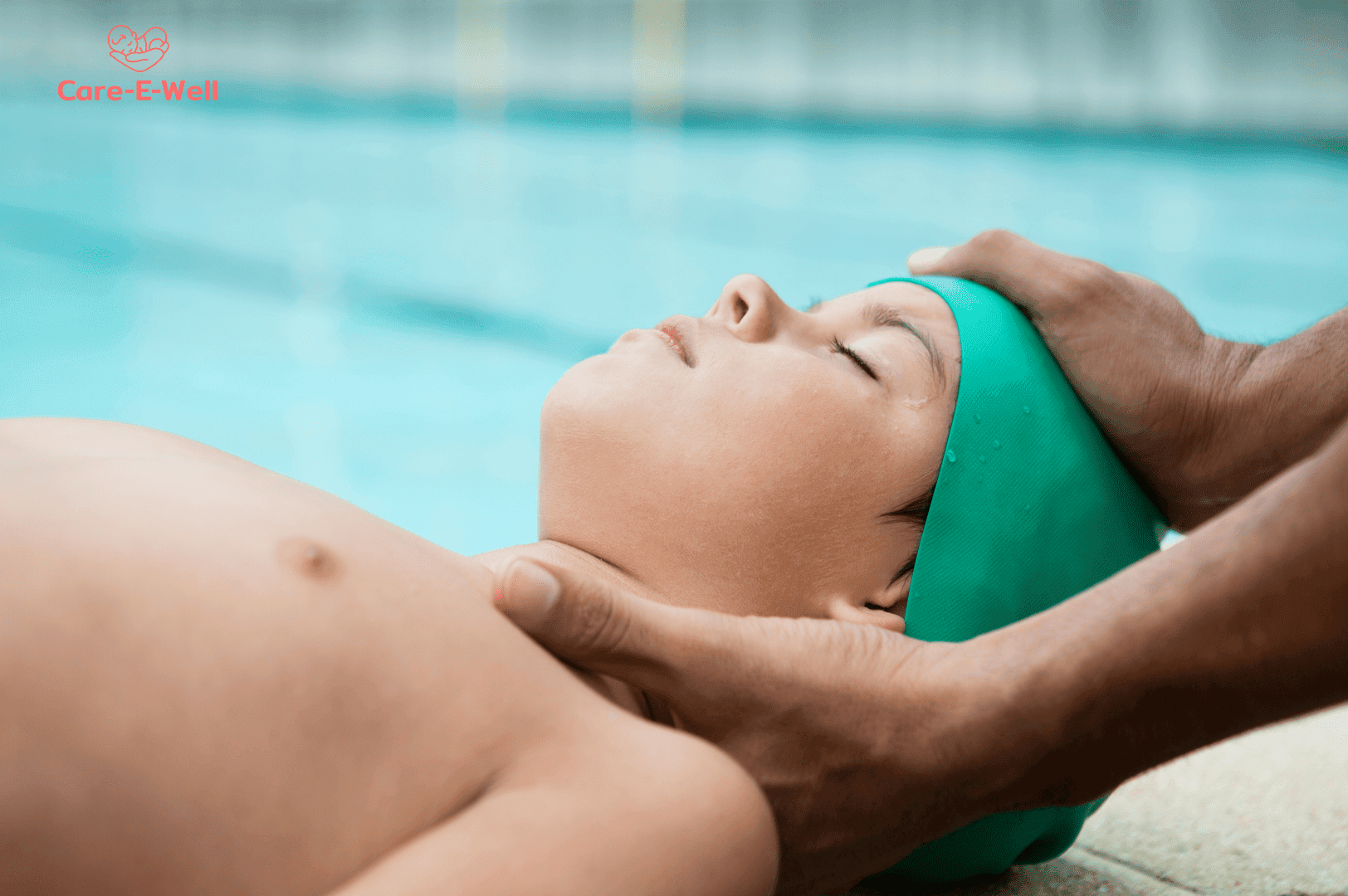
An unconscious but breathing child needs urgent medical assessment. First check that the child is genuinely unresponsive and breathing normally, call emergency services, then keep the airway open. If there is no major trauma that makes movement unsafe, place the child in a stable side-lying recovery position and keep watching their breathing.
The most important distinction is between normal breathing and gasping. An unconscious child who is only gasping, snorting irregularly or not breathing normally needs CPR, not the recovery position.
If an unresponsive child is not breathing normally, begin age-appropriate CPR and use an AED as soon as one is available.
What should you do first when a child is unconscious but breathing?
- Make sure the scene is safe.
- Check whether the child responds to voice and gentle stimulation.
- Open the airway and check for normal breathing.
- Call emergency services or ask someone else to call.
- If breathing is normal and there is no major trauma concern, place the child on their side in a stable recovery position.
- Keep the airway open and monitor breathing continuously.
- If breathing becomes abnormal or stops, roll the child onto their back and start CPR.
The recovery position is not a “set and forget” position. Stay with the child and keep checking breathing until professionals take over.
How do you tell normal breathing from gasping?
Normal breathing is regular enough to move air effectively and usually produces visible chest movement. Agonal gasps can look like occasional deep snorts, irregular breaths or long pauses. They are not normal breathing.
If you are unsure, emergency dispatch can guide you. In an unresponsive child, it is safer to treat clearly abnormal gasping as cardiac arrest and begin CPR than to assume the child is breathing adequately.
What is the recovery position for a child?
The recovery position is a stable side-lying position that helps keep the airway open and allows fluid, saliva or vomit to drain out of the mouth rather than pooling at the back of the throat.
- Kneel beside the child.
- Position the child on their side in a stable way so they cannot easily roll onto the stomach or back.
- Keep the mouth angled downward so fluid can drain.
- Gently position the head so the airway remains open.
- Make sure nothing is pressing on the chest or restricting breathing.
- Recheck breathing immediately after positioning.
Exact hand and leg placement varies slightly between first-aid systems. The goals are more important than reproducing a diagram perfectly: stable side-lying, open airway, free breathing and continuous observation.
Can you use the recovery position for a baby?
A baby who is unresponsive but breathing normally also needs an open airway and urgent assessment. A stable side-lying position can be used while carefully supporting the head and keeping the airway neutral.
Because infants have proportionally larger heads and more flexible airways, avoid forcing the chin tightly onto the chest or overextending the neck. If you are uncertain, follow emergency-dispatch instructions while monitoring breathing.

What if the child vomits?
Side-lying helps reduce the risk of vomit blocking the airway. Let material drain from the mouth and remove only material you can clearly see and reach safely.
Do not perform blind finger sweeps deep in the mouth. If vomiting occurs while the child is on their back, turn them onto their side promptly while protecting the head and neck as much as practical.
What if the child has had a seizure?
After a seizure, many children are sleepy or temporarily unresponsive but continue breathing normally. Once active convulsions have stopped, place the child on their side when safe, keep the airway clear and time the seizure if possible.
Do not put anything in the child’s mouth and do not try to hold the tongue. Call emergency services for a first seizure, prolonged seizure, repeated seizures without recovery, breathing difficulty, serious injury or persistent reduced consciousness.
What if there may be a head or neck injury?
Major trauma changes the balance between airway protection and movement. If the child may have a spinal injury after a fall, collision, diving accident or other high-energy event, minimise unnecessary movement.
Airway and breathing still come first. If the child is vomiting, the airway cannot be kept open on the back or breathing is threatened, the child may need to be turned onto the side despite the trauma concern. When possible, use another person to help keep the head, neck and body aligned.
Do not leave an unconscious child flat on their back if vomit or secretions are threatening the airway simply because you are worried about the neck. Protecting breathing takes priority.
What if the child fainted?
A simple faint usually causes brief loss of consciousness with rapid recovery once the child is lying down. If the child remains unconscious, is difficult to wake, has chest pain, breathing difficulty, seizure-like activity or was injured in the fall, treat it as more than a simple faint and seek urgent care.
A child who has regained full consciousness and is breathing normally does not need to remain in the recovery position, but they should stay resting while the cause is assessed.
What if poisoning is possible?
Unconsciousness after possible poisoning is an emergency. Call emergency services and, where available, a poison information service. Keep packaging or product information for clinicians if this does not delay care.
Do not induce vomiting and do not give food, drink or medicines to an unconscious or drowsy child. If breathing is normal, protect the airway with side-lying positioning when safe.
What if anaphylaxis caused the collapse?
If a child with suspected anaphylaxis becomes unconscious but is still breathing, use prescribed adrenaline according to the child’s emergency plan if this has not already been given, call emergency services and protect the airway.
A conscious child with anaphylaxis should generally not be allowed to stand or walk because sudden upright positioning can worsen circulatory collapse. If unconscious and breathing, side-lying positioning may be needed for airway protection.
What if the child was rescued from water?
After drowning, breathing is the priority. If the child is unconscious but breathing normally after rescue, place them on their side, keep the airway open, protect them from cold and call emergency services.
If breathing becomes abnormal, begin CPR. A child who was unconscious after submersion needs medical assessment even if they seem to recover quickly.
Should you give the child water or medicine?
No. Do not give anything by mouth to an unconscious or significantly drowsy child. Swallowing may be unsafe and fluid or medicine can enter the airway.
Wait until the child is fully awake and a healthcare professional confirms that drinking is appropriate.
Should you keep trying to wake the child?
Check responsiveness initially and continue observing for changes, but do not repeatedly shake or slap the child. Gentle voice and touch are enough.
Reduced consciousness can have many causes, including seizure, head injury, poisoning, low blood sugar, infection, drowning, heat illness or anaphylaxis. First aid focuses on airway, breathing and emergency assessment rather than diagnosing the cause at home.
What if the child wakes up before help arrives?
Reassure them and keep them resting. Do not let them immediately stand or walk, particularly after a faint, anaphylaxis, heat illness or significant injury.
Tell emergency clinicians what happened, how long the child was unresponsive, whether breathing changed, whether there was vomiting or a seizure and what first aid was given.

How often should you check breathing?
Continuously observe the child rather than relying on occasional checks. Watch chest movement, listen for effective breathing and notice colour or responsiveness changes.
Recheck after any movement, vomiting episode or change in position. A child can deteriorate after initially breathing normally.
When should you start CPR instead?
- the child is unresponsive and not breathing normally
- breathing stops
- only occasional gasps are present
- the child becomes blue or grey and breathing is ineffective
- you cannot detect normal breathing after opening the airway
Follow the paediatric CPR sequence taught by your recognised training provider and emergency dispatcher. Use an AED as soon as it is available.
What should you avoid doing?
- do not leave the child alone
- do not give food, drink or medicine by mouth
- do not put a pillow under the head if it closes the airway
- do not repeatedly shake the child
- do not assume gasping is normal breathing
- do not delay emergency help while trying to identify the cause
- do not force a trauma patient into a position that compromises the airway
First aid for unconsciousness is about preserving oxygen delivery. An open airway and normal breathing matter more than identifying the diagnosis in the first minutes.
Frequently asked questions
Is the recovery position safe for every unconscious child?
It is appropriate for many unresponsive children who are breathing normally, but suspected major trauma may require minimising movement. Airway protection always takes priority.
Should I put something under the child’s head?
Not routinely. The head should be positioned to keep the airway open. Thick pillows can flex a small child’s neck and obstruct breathing.
What if the child is breathing but making strange noises?
Snoring, gurgling or obstructed sounds can mean the airway is not fully open. Reposition the airway and seek emergency help. Gasping is not normal breathing.
Can I let the child sleep after they wake up?
That depends on the cause. After significant unconsciousness, seizure, head injury, poisoning or drowning, professional assessment is appropriate rather than simply assuming sleep is safe.
Should I drive the child to hospital myself?
For persistent unconsciousness, abnormal breathing, major trauma or rapid deterioration, emergency medical transport is safer because treatment can begin on the way.
The key takeaway
An unconscious but breathing child needs urgent assessment and continuous airway monitoring. Check responsiveness and normal breathing, call emergency services and place the child in a stable side-lying recovery position when there is no major reason to avoid movement. If trauma is suspected, minimise unnecessary movement but never sacrifice the airway. Do not give anything by mouth. If breathing becomes abnormal or stops, start CPR immediately.
Sources and References
- Hewett Brumberg EK, Douma MJ, Alibertis K, et al. — 2024 American Heart Association and American Red Cross Guidelines for First Aid
- Zideman D, Singletary EM, Borra V, et al. — European Resuscitation Council Guidelines 2021: First aid
- Wyckoff MH, Singletary EM, Soar J, et al. — 2021 International Consensus on Cardiopulmonary Resuscitation and Emergency Cardiovascular Care Science With Treatment Recommendations
- Lee J, Kim DK, Kim JT, et al. — 2025 Korean Guidelines for Cardiopulmonary Resuscitation: Part 7. Pediatric basic life support
- Lee JS, Kim DK, Kang EK, et al. — 2020 Korean Guidelines for Cardiopulmonary Resuscitation. Part 6. Pediatric basic life support
- Michel J, Ilg T, Neunhoeffer F, et al. — Implementation and Evaluation of Resuscitation Training for Childcare Workers
- Dezfulian C, McCallin T, Bierens J, et al. — 2024 AHA/AAP Focused Update: Resuscitation Following Drowning
- Simons FER, Ardusso LRF, Bilò MB, et al. — International consensus on (ICON) anaphylaxis
- Davis CA, Schmidt A, Sempsrott J, et al. — Wilderness Medical Society Clinical Practice Guidelines for the Treatment and Prevention of Drowning: 2024 Update
Did this Insight help?
A little love for something worth reading.


