
Care-E-Well Insights
What Age Should Potty Training Start?
What age should potty training start? Learn the readiness signs, timing evidence and when waiting may make training easier.
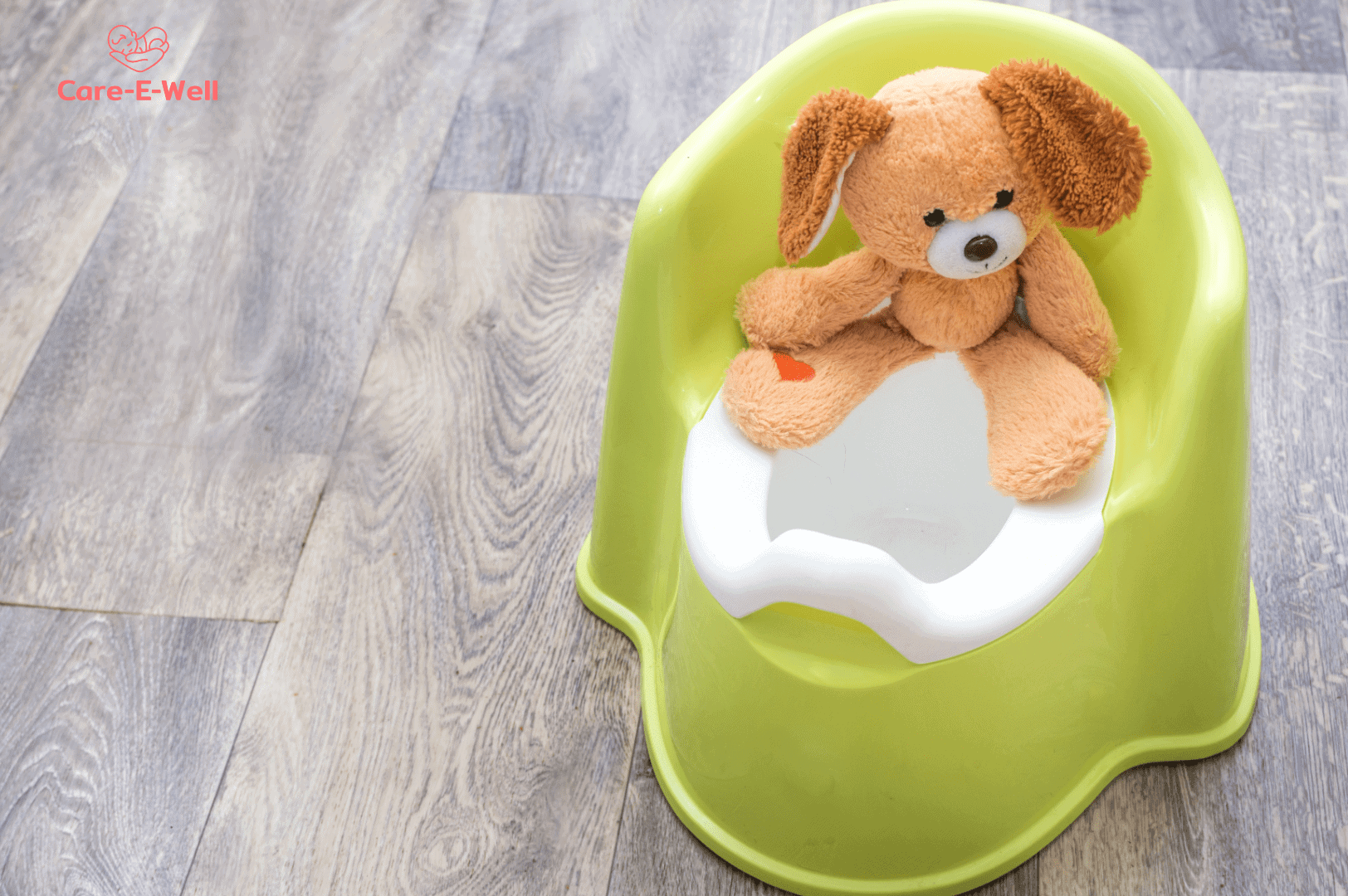
If you are wondering what age should potty training start, the most useful answer is not a birthday. Most children become ready somewhere in the toddler years, but the timing varies widely because toileting depends on several skills developing together: body awareness, bladder and bowel control, communication, movement and willingness to cooperate.
A child-oriented approach usually makes more sense than starting because a sibling, nursery class or calendar says it is time. Research has not identified one perfect age or one method that works best for every child, and studies suggest that beginning very early can make the overall training period longer even when children eventually finish earlier.
Think of potty-training readiness as a cluster of skills and behaviours, not a deadline.
What age should potty training start for most children?
Many child-oriented recommendations have traditionally placed the starting window around 18 to 24 months, provided the child is showing developmental readiness. That range should be treated as a guide rather than a rule. Some children show clear signs earlier, while others need more time.
A longitudinal study of typically developing children found substantial variation in when individual toileting skills appeared. Skills do not arrive all at once, and girls in that study tended to acquire several skills earlier than boys. More recent population research also reinforces that normal toileting development covers a broad age range.
This matters because a child can be physically capable of sitting on a potty but still lack the awareness or communication needed to use it consistently. Readiness is therefore more informative than chronological age alone.
Which readiness signs matter most?
There is no scientifically validated checklist that every child must complete before training begins. However, practical readiness signs commonly described in the literature include increasing awareness of bladder or bowel sensations, the ability to follow simple instructions and enough mobility to get to and sit on a potty or toilet safely.
- staying dry for longer stretches than before
- showing awareness before, during or soon after a wee or bowel movement
- communicating a need to go through words, gestures or behaviour
- being able to sit steadily and get up with suitable support
- showing interest in the bathroom, potty or underwear
- cooperating with simple routines such as pulling clothing up and down
- tolerating brief, relaxed sits without distress
A child does not need every sign before you start introducing the idea. You can familiarise them with the potty, name body signals and let them observe normal bathroom routines before expecting independent toileting.

Is starting earlier better?
Not necessarily. In a prospective study, earlier initiation of intensive toilet training was associated with an earlier age of completion, but it also correlated with a longer total duration of training. That finding does not mean early training is harmful; it shows why “earlier” and “faster” are not the same thing.
Observational studies have produced mixed findings about whether later training is associated with later continence or urinary symptoms. These studies cannot prove that timing itself causes later problems because family routines, developmental differences, constipation, childcare and many other factors may influence both when training begins and how it progresses.
The practical aim is not to beat a particular age. It is to start at a time when the child can understand the process well enough that repeated practice is likely to feel achievable rather than confusing.
Can you start introducing the potty before formal training?
Yes. Potty familiarisation is different from expecting continence. A toddler can learn bathroom words, sit on a potty while clothed, help flush, wash hands and see toileting as an ordinary daily activity without any pressure to perform.
This low-pressure introduction can be especially useful for children who need time to become comfortable with new routines or equipment. It also gives parents a chance to notice natural patterns, such as a bowel movement after breakfast or a predictable dry period after a nap.
When might it be better to wait?
Consider delaying an intensive training attempt when the child is strongly resisting, the family is in the middle of a major disruption, or bowel movements are painful. Toilet training requires repetition and calm responses, so starting during a house move, new childcare transition, major illness or another stressful change may make consistency harder.
Constipation deserves particular attention. Research on stool toileting refusal has found links with painful defecation and constipation, and recent reviews emphasise addressing painful bowel movements rather than pushing through them. A child who is afraid that pooping will hurt may understandably avoid the toilet.
Seek medical advice if your child has persistent painful or hard stools, blood in the stool, marked abdominal swelling, repeated stool withholding, significant pain, or a toileting change that concerns you. Treating constipation and other health problems may need to come before training.
Does daytime dryness come before night-time dryness?
Often, yes. Night-time bladder control is a separate developmental process and should not be used as the test of whether daytime potty training has “worked.” A child may use the toilet reliably during the day and still need protection overnight for a considerable time.
Avoid waking a young child repeatedly simply to prove they can stay dry. Daytime toileting is mainly about recognising signals, reaching the toilet and coordinating clothing and elimination. Overnight dryness depends more heavily on sleep, bladder capacity and physiological maturation.
How to decide whether to start now
Instead of asking only for an age, look at the interaction between your child's signals and your family's ability to support a consistent, calm routine.
- Watch for several readiness signs over a couple of weeks.
- Check that bowel movements are soft and not painful.
- Choose a potty chair or toilet setup where your child feels stable.
- Introduce simple words for wee, poop, potty and toilet.
- Offer short, relaxed opportunities at predictable times.
- Praise participation and communication rather than demanding a result.
- If resistance escalates, reduce pressure and reassess instead of turning toileting into a battle.
Progress will rarely be perfectly linear. Accidents, sudden disinterest and periods of needing more help are normal parts of learning a multi-step self-care skill.
A useful starting point is when your child has enough awareness and cooperation to practise, and you can keep the process calm and consistent.
What if my child is already older than the usual starting range?
There is no need to treat an older toddler as if a deadline has been missed. Start by looking at what is getting in the way. Some children simply had little opportunity or interest; others may be dealing with constipation, fear, sensory discomfort, communication differences or developmental needs.
If your child is approaching preschool age and shows no awareness of wetting or bowel movements, cannot participate in the process at all, or has persistent toileting difficulties, discussing this with a paediatric healthcare professional can help identify whether extra support is useful.

Frequently asked questions
Is 18 months too early for potty training?
Not automatically, but many 18-month-olds will still need substantial help and may not yet have enough readiness skills for consistent training. It can be a good age for gentle familiarisation if the child is interested.
Is 2 years old the best age to start?
Two years is a common time to begin, but it is not a scientifically proven best age. Developmental readiness, bowel comfort and the child's willingness matter more than turning two.
Is 3 years old too late to start potty training?
No. Many children complete daytime training in the third year or later. If there are persistent bowel, bladder or developmental concerns, professional advice can help clarify what support is needed.
Should I stop if my child keeps saying no?
Repeated strong resistance is a reason to reduce pressure and examine the cause. A short pause, a change in equipment, attention to constipation or a slower introduction may work better than escalating reminders or consequences.
How long should potty training take?
There is no reliable fixed duration. Learning often unfolds over weeks or months, and earlier initiation may lengthen the overall training period. Focus on gradual gains such as noticing signals, sitting willingly and having more successful toilet trips.
The key takeaway
When deciding what age should potty training start, use age as context rather than a deadline. A calm start based on readiness, comfortable bowel movements and realistic family routines is more useful than forcing a child to meet a timetable.
Sources and References
- Schum TR, Kolb TM, McAuliffe TL, et al. — Sequential Acquisition of Toilet-Training Skills: A Descriptive Study of Gender and Age Differences in Normal Children
- Blum NJ, Taubman B, Nemeth NM — Relationship Between Age at Initiation of Toilet Training and Duration of Training: A Prospective Study
- Kiddoo D — Toilet training children: when to start and how to train
- Brazelton TB — A Child-Oriented Approach to Toilet Training
- Vermandel A, Van Hal G, Van der Cruyssen K, et al. — ‘Elimination signals’ in healthy, NON toilet trained children aged 0–4 years: A systematic review
- Köstekçi YE, Başkan S, Topçu S, et al. — Evaluation of the effects of the toilet training process on the children's quality of life
- Huijgen D, Karramass T, Versteegh HP, et al. — Toilet training and bowel habits in children up to 4 years: Insights from a population-based prospective cohort study
- de Morais MB — Prevention of pediatric functional constipation: a narrative review
- Alyami F, Almannie R, Al-Emran JS, et al. — Age of Initiation and the Factors Associated with Toilet Training in Healthy Saudi Children
Did this Insight help?
A little love for something worth reading.


