
Care-E-Well Insights
When Can Babies Have Cow’s Milk? Drink vs Ingredient Explained
When can babies have cow's milk? Learn the difference between using it in food, offering dairy, and using cow's milk as a drink.
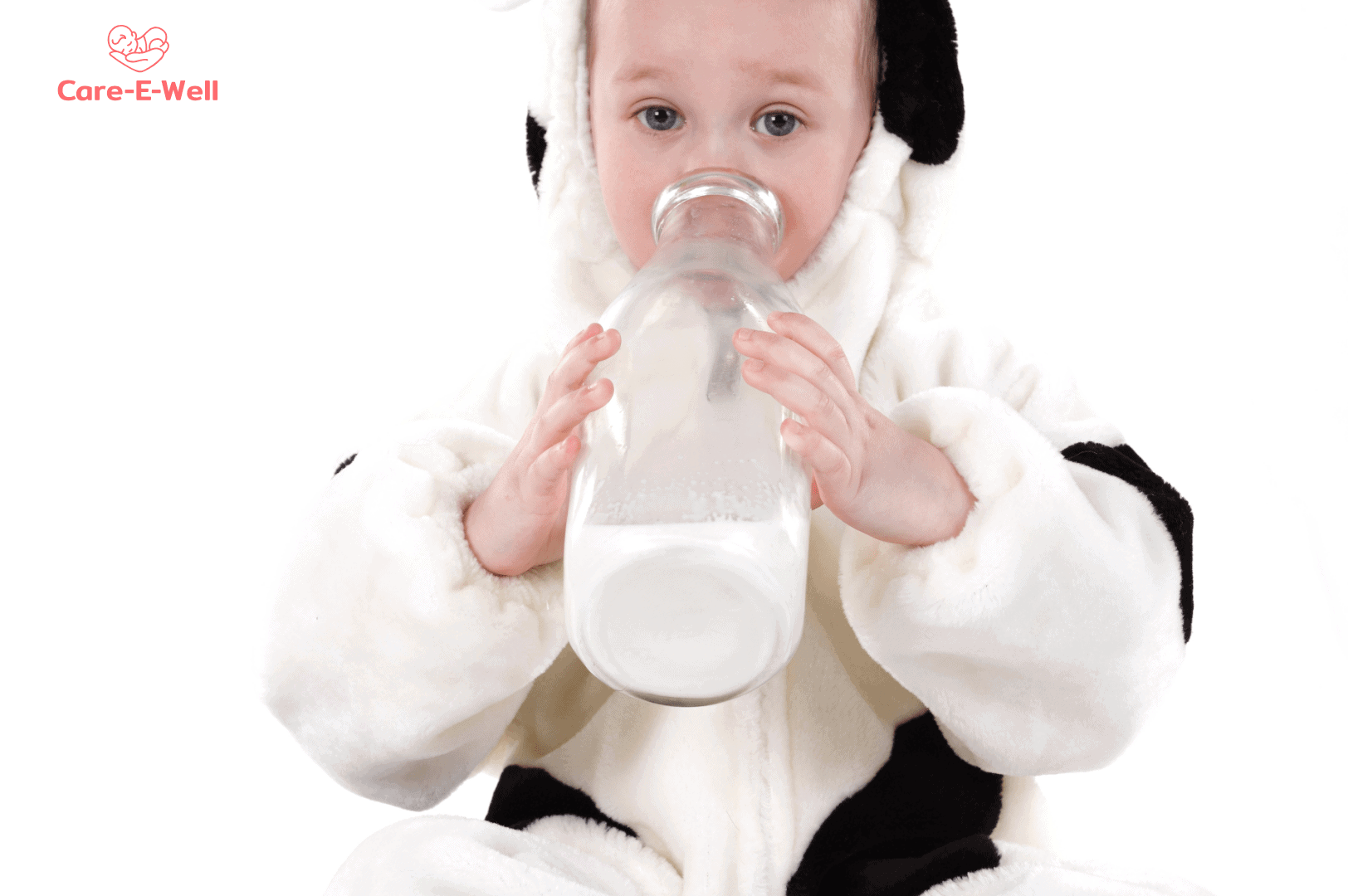
When can babies have cow's milk? The answer depends on what you mean by "have." Cow's milk used in food, pasteurised dairy foods such as plain yoghurt, and cow's milk offered as a substantial milk drink are not nutritionally identical situations.
Complementary foods generally start around 6 months. From then, pasteurised dairy foods and small amounts of cow's milk used in cooking can fit into a varied diet. But during the first year, breast milk or an appropriately formulated infant milk remains an important nutritional foundation, and plain cow's milk should not casually displace those milk feeds.
Think in three separate categories: cow's milk as an ingredient, dairy foods such as yoghurt or cheese, and cow's milk as a main drink. The age and nutritional implications differ.
When can babies have cow's milk as an ingredient?
Once a baby is developmentally ready for complementary foods, usually around 6 months, small amounts of pasteurised cow's milk can be used in foods such as porridge, sauces, mashed vegetables or cooked dishes. This is complementary feeding, not replacement of the baby's main milk nutrition.
EFSA's complementary-feeding work evaluates foods introduced alongside breast milk or formula, and the European Commission distinguishes complementary baby foods from infant and follow-on formulae. That distinction is useful in everyday feeding: adding a little milk to a meal is different from replacing a breast or formula feed with a bottle or cup of plain cow's milk.
When can babies eat yoghurt and other dairy foods?
Pasteurised plain yoghurt and other developmentally appropriate dairy foods can be introduced during complementary feeding. WHO includes dairy products among the food groups that contribute to dietary diversity for children aged 6–23 months.
Choose products with a texture your baby can manage and avoid relying on sweetened dairy desserts. WHO advises against adding sugars to complementary foods and encourages nutrient-dense foods rather than foods that are mainly sweet.

What about cheese?
Pasteurised cheese can be offered in an age-appropriate texture, but the type matters. Some cheeses are salty, hard or difficult to chew. Use small amounts, adapt the texture and consider the rest of the day's sodium intake.
Cheese does not need to be introduced before yoghurt, and there is no requirement to serve dairy every day if the child's overall diet and milk feeding provide appropriate nutrition.
When can cow's milk become the main drink?
This is where advice becomes more nuanced. In European practice, the first year is still treated as a distinct nutritional period: the European Commission defines an infant as a child under 12 months and defines follow-on formula as a food used when complementary feeding begins that can constitute the principal liquid element of a progressively diversified diet.
WHO's 2023 global guideline specifically reviewed animal milk compared with formula for non-breastfed or mixed-fed infants aged 6–11 months, reflecting that feeding contexts differ worldwide. That means the evidence does not support pretending that every family in every setting has the same milk-feeding options.
For a healthy European infant who is breastfed, continued breastfeeding alongside solids remains appropriate. For an infant who depends on formula, formula is designed to meet infant nutritional requirements in a way that plain cow's milk is not. Parents should therefore discuss any plan to replace formula with plain cow's milk before 12 months with their paediatric or child-health professional rather than making the switch based on age alone.
Why is plain cow's milk nutritionally different from infant formula?
Infant and follow-on formulae are regulated foods with defined nutritional composition. EFSA's work on formula composition is based on meeting the energy, macronutrient and micronutrient needs of infants.
Plain cow's milk is a normal food, not an infant formula. It can contribute protein, fat, calcium and other nutrients, but it is not formulated to reproduce the micronutrient profile required from a principal infant milk. Iron deserves particular attention because EFSA has identified iron as one of the nutrients for which inadequate intake can occur in European infants and young children.
The concern is not that cow's milk suddenly becomes "toxic" before the first birthday. The concern is what it may replace and whether the whole diet still covers the baby's nutritional needs.
Does cow's milk cause iron deficiency?
It is more accurate to say that feeding patterns can influence iron status. Cow's milk itself is not an iron-rich food, and large amounts can displace iron-rich complementary foods or a nutritionally complete infant milk.
Once solids start, regularly include iron-rich foods appropriate to the family's diet. That may include meat, fish, eggs, pulses, iron-fortified foods and other suitable sources. If a child follows a vegetarian or vegan diet, iron planning deserves particular attention because plant iron is less readily absorbed than haem iron from animal foods.
Should cow's milk be full-fat?
Babies have high energy and fat needs, so low-fat adult-style dieting is not appropriate. If plain dairy foods are offered during infancy, full-fat versions are generally the more practical choice unless a clinician has advised otherwise for a specific medical reason.
The important point is not to use an adult low-fat diet as the template for infant feeding. Babies need energy-dense, nutrient-dense foods in relatively small volumes.
What about cow's milk allergy?
Cow's milk protein is a common food allergen. Introducing dairy during complementary feeding does not mean allergy is expected, but parents should know what a reaction can look like.
Immediate reactions can include hives, swelling, vomiting, coughing, wheezing or sudden lethargy. Delayed gastrointestinal or skin symptoms are more difficult to interpret and should not be self-diagnosed as an allergy on the basis of one symptom.
If dairy causes breathing difficulty, swelling of the tongue or throat, collapse, marked lethargy or another severe immediate reaction, seek emergency medical help. For repeated milder reactions, stop the suspected food and arrange professional assessment before trying it again.
Can lactose-free cow's milk replace formula?
Lactose-free cow's milk is still cow's milk with a modified carbohydrate content. Removing lactose does not turn it into infant formula and does not solve the broader question of infant nutrient composition.
If a baby needs a specialist milk because of allergy, malabsorption, prematurity or another medical condition, use the product recommended by the child's clinician rather than choosing an adult lactose-free milk independently.

What about plant drinks instead of cow's milk?
Plant drinks vary widely in protein, energy, fat, vitamins and minerals. They should not be assumed to be nutritionally equivalent to cow's milk or infant formula simply because they are white liquids used in a cup.
Families following a vegan diet need a deliberate plan for infant milk, complementary foods and key nutrients. This is especially important for vitamin B12, iron, iodine, vitamin D, calcium, zinc and essential fatty acids.
A practical timeline
- Around 6 months: begin complementary foods when developmentally ready.
- From the start of solids: small amounts of pasteurised cow's milk can be used in cooking or mixed into foods.
- From the start of solids: pasteurised plain yoghurt and other suitable dairy foods can be introduced in safe textures.
- Throughout the first year: protect the baby's main milk nutrition; do not casually replace breast milk or formula with large amounts of plain cow's milk.
- Around and after 12 months: a wider family diet becomes appropriate for most children, and plain cow's milk can play a larger role if it fits the child's overall diet and local guidance.
Frequently asked questions
Can I put cow's milk in my 6-month-old's porridge?
Yes, a small amount of pasteurised cow's milk used as an ingredient can be part of complementary feeding once the baby is ready for solids.
Can a baby have yoghurt before 12 months?
Yes. Pasteurised plain yoghurt is a dairy complementary food, not the same as using cow's milk as the baby's principal drink.
Is cow's milk forbidden as a drink before 12 months?
A blanket statement is too simplistic globally. WHO's 2023 guideline considers animal milk for some 6–11-month-old non-breastfed or mixed-fed infants. In European families with access to breast milk or appropriate formula, however, parents should not independently replace infant milk with plain cow's milk before 12 months without professional guidance.
Does a baby need follow-on formula after 6 months?
Not every baby needs a separate follow-on product. Breastfed babies can continue breastfeeding, while formula-feeding choices depend on the product, local guidance and the child's nutritional needs.
Conclusion
When can babies have cow's milk? Small amounts in food and appropriate pasteurised dairy foods can be introduced with complementary feeding, usually around 6 months. The more important question is when plain cow's milk should replace breast milk or formula as a major drink, and that decision should account for the baby's age, feeding pattern, iron intake and local clinical guidance.
Sources/References
- WHO — Guideline for complementary feeding of infants and young children 6–23 months of age. https://www.who.int/publications/i/item/9789240081864
- WHO — Complementary feeding. https://www.who.int/health-topics/complementary-feeding
- WHO — Infant and young child feeding. https://www.who.int/news-room/fact-sheets/detail/infant-and-young-child-feeding
- WHO — Healthy diet. https://www.who.int/news-room/fact-sheets/detail/healthy-diet
- EFSA — 'Growing-up' formula: No additional value to a balanced diet, says EFSA. https://www.efsa.europa.eu/en/press/news/131025
- EFSA — EFSA updates advice on infant and follow-on formulae. https://www.efsa.europa.eu/en/press/news/140724
- EFSA — Age to start complementary feeding of infants. https://www.efsa.europa.eu/en/news/age-start-complementary-feeding-infants
- EFSA — Foods for infants and other groups. https://www.efsa.europa.eu/en/topics/topic/foods-infants-and-other-groups
- European Commission — Food for infants and young children. https://food.ec.europa.eu/food-safety/labelling-and-nutrition/specific-groups/food-infants-and-young-children_en
Estimated reading time: 7 minutes
Did this Insight help?
A little love for something worth reading.


