
Care-E-Well Insights
When Can a Child Move to a Forward-Facing Car Seat?
Learn when a child can face forward, why 15 months is only a minimum under UN R129, and how to know when rear-facing is outgrown.
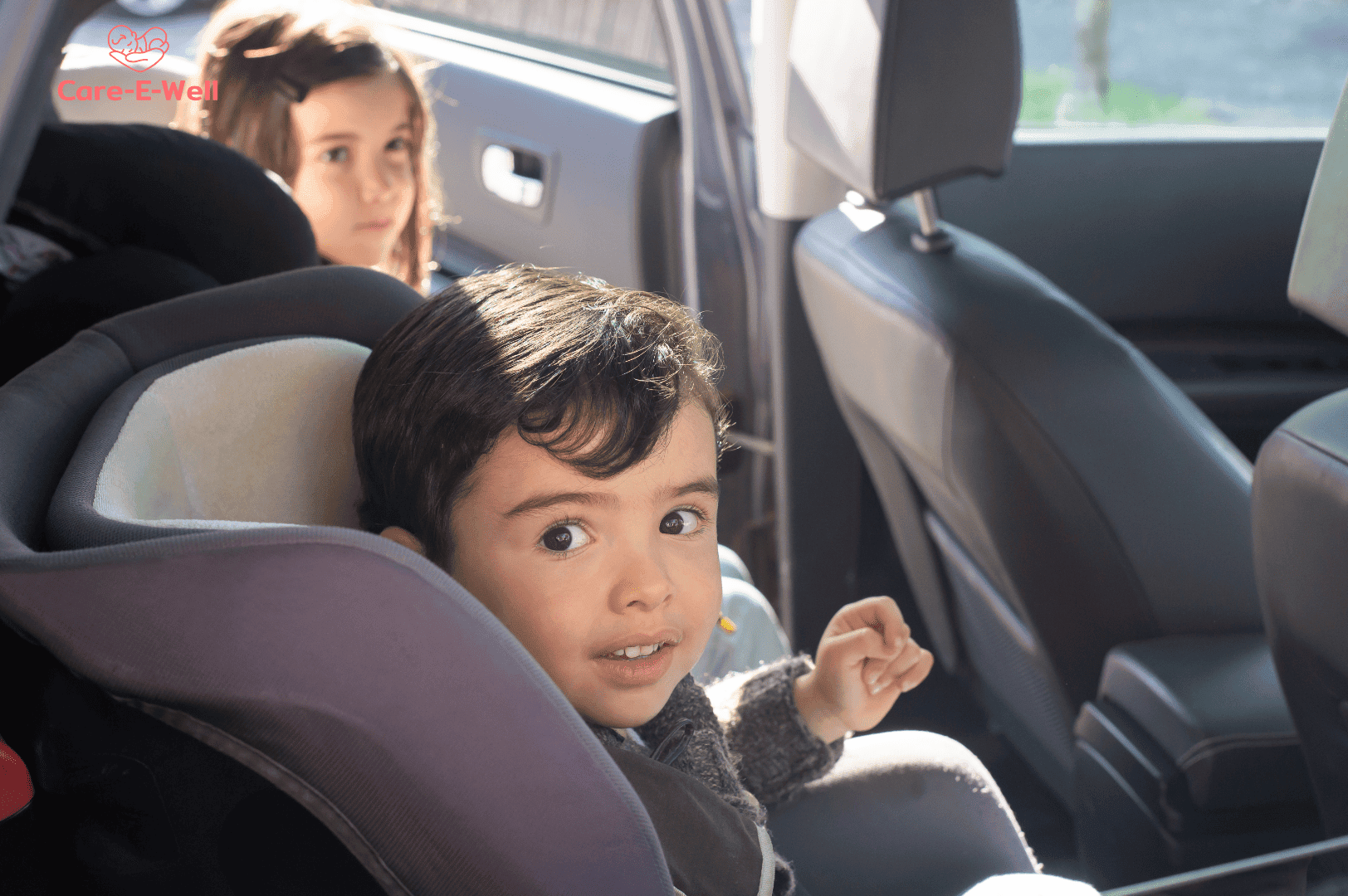
A child can move to a forward-facing car seat only after they meet the minimum requirements for forward-facing use and have outgrown, or are ready to leave, the rear-facing configuration of their approved restraint. In Europe, UN Regulation No. 129 requires the youngest children to travel rear-facing to at least 15 months within the regulation’s framework.
But 15 months is a minimum, not a target date for turning forward. Rear-facing supports a young child’s head, neck and torso together during a frontal crash, so continuing rear-facing while the child still fits the approved seat preserves that biomechanical advantage.
Do not turn a child forward simply because they have reached 15 months. Check the rear-facing limits of the actual seat first.
What is the minimum age for forward-facing under UN R129?
UN R129 improves child-restraint protection by requiring young children to remain rear-facing until at least 15 months. The regulation also uses the child’s stature as an important classification measure, rather than relying only on traditional weight groups.
National road laws can add their own requirements, while each child restraint carries specific stature and, where applicable, mass limits. That means parents should check three things together: the current rules where they drive, the approval label on the restraint, and the manufacturer’s instructions for the exact configuration.
Reaching 15 months does not automatically mean a child has outgrown rear-facing. Many modern restraints allow rear-facing use well beyond that minimum.
Why is rear-facing useful for young children?
In a frontal collision, a forward-facing harness holds the torso while the head continues moving forward. A young child has a proportionally larger head and a developing cervical spine, so controlling that relative head-and-neck movement matters.
In a rear-facing restraint, the child moves into the shell of the seat. The shell supports the head, neck and back together and spreads crash forces over a broader part of the body.
A 2024 systematic review of paediatric motor-vehicle crash injuries found that rear-facing configurations generally produce lower injury measures than forward-facing configurations in frontal-impact models, especially for head and neck loading. This does not mean rear-facing prevents every injury, but it explains why turning forward is not something to rush.

Should you wait until the rear-facing seat is fully outgrown?
In most cases, yes. If the child remains within the restraint’s rear-facing limits and you can still use the seat correctly, changing direction early offers no safety advantage.
Check the manual for the maximum rear-facing stature, any mass limit, required head position relative to the shell, harness position and other fit criteria. Different restraints have different limits.
A child may reach one limit before another. Once the child reaches an applicable rear-facing limit, they have outgrown that configuration even if a younger or older child still fits a different seat.
Are bent legs a reason to turn forward?
No. Bent, crossed or folded legs are common in rear-facing seats as children grow. The appearance can look cramped to an adult, but leg position alone is not an outgrowing criterion unless the manufacturer specifically identifies a fit problem.
Parents sometimes assume that touching the vehicle seat with the feet means the child is too tall. In most rear-facing designs, it does not. Use the approved stature and fit limits, not the amount of visible legroom, to decide.
If a child is genuinely uncomfortable, first check the recline setting, clothing, seat configuration and whether an approved adjustment can improve space without compromising installation.
What if your child strongly dislikes rear-facing?
Car-seat resistance can come from many things: heat, sun glare, tiredness, motion sickness, poor harness adjustment, an uncomfortable recline, boredom or simply disliking the seat. Turning forward is not always the solution.
- Check the harness and headrest adjustment for the child’s current size.
- Make sure clothing is not bulky or bunched under the harness.
- Check the approved recline position.
- Reduce overheating and direct sun exposure.
- Plan breaks on longer journeys.
- Review the installation if the child appears consistently uncomfortable.
If the child has repeated vomiting, severe motion sickness, pain, breathing difficulty or another medical concern during travel, discuss it with an appropriate health professional. Do not modify the restraint with unapproved cushions or accessories.
Does a child need strong neck control before facing forward?
Head control is not a substitute for the restraint’s approval limits. A toddler who can run, climb and hold the head steadily still has a developing skeleton and different body proportions from an older child.
Base the forward-facing decision on the regulatory minimum, the child’s size and the limits of the specific restraint—not on an impression that the child “looks strong enough.”
This is also why old advice such as turning forward when a baby can sit independently should not override current R129-approved use instructions.
What kind of forward-facing restraint comes next?
The next stage depends on the child’s size and the approved products available. For many children, it will be a forward-facing child restraint with an integrated harness or another approved internal restraint system.
Keep the child in that system until they reach its forward-facing limits. Moving directly from rear-facing to a booster too early can leave a child without the body control and belt fit needed for safe booster use.
A booster relies on the vehicle’s adult lap-and-shoulder belt and on the child maintaining correct posture throughout the journey. That is a later developmental and fit question, not simply the next step after rear-facing.

How do you install the forward-facing seat?
Follow the restraint manual and the vehicle manual together. Depending on the product, installation may use ISOFIX, the vehicle belt, a top tether, a support leg or another approved anti-rotation method.
Every required component matters. Research on restraint misuse has linked loose harnesses, incorrect routing and omitted or incorrectly used tether systems with poorer crash performance and greater occupant movement.
Never improvise an installation or omit a required support leg, top tether or other component because the seat appears stable without it.
What about an active frontal airbag?
Never place a rear-facing restraint in front of an active frontal airbag. For a forward-facing restraint in the front passenger position, check whether the vehicle and child-restraint instructions permit that position and require any airbag or seat-position adjustment.
The rear seating area is generally preferred for children because it separates them from the dashboard and frontal airbag zone. Always follow the rules that apply in the country where you are driving.
A simple forward-facing transition checklist
- Confirm the child is at least the regulatory minimum for forward-facing use under the restraint’s approval framework.
- Check whether the child still fits the current rear-facing configuration.
- Read the exact rear-facing and forward-facing limits in the restraint manual.
- Confirm the chosen vehicle seating position is approved.
- Install the forward-facing restraint exactly as instructed, including any tether or support system.
- Adjust the harness and headrest for the child’s current size.
- Recheck fit after the first few journeys and whenever you move the seat.
If any step is unclear, use the manufacturer’s support information or a trained child-restraint professional rather than guessing.
The key takeaway
A child can move to a forward-facing car seat only after the minimum requirements are met, but there is usually no need to turn forward at the earliest legal moment. Under UN R129, 15 months is a minimum rear-facing threshold for the youngest children. The safer practical approach is to continue rear-facing while the approved seat still fits, then transition carefully to the next correctly fitted restraint.
Frequently asked questions
Can my child face forward at exactly 15 months?
A seat may permit it once the child meets all applicable requirements, but 15 months is a minimum threshold, not a recommendation to turn immediately. Continue rear-facing if the approved seat still fits.
Is my child too big for rear-facing if their legs touch the vehicle seat?
Not necessarily. Leg position alone is usually not the outgrowing criterion. Check the restraint’s approved stature, mass and fit limits.
Is sitting independently enough to turn forward?
No. Developmental milestones do not replace the restraint’s approval requirements or the benefits of rear-facing crash mechanics.
Should I buy a larger rear-facing seat if the infant seat is outgrown early?
If the child is still young enough that rear-facing should continue, an approved rear-facing restraint with a larger size range can allow the child to remain rear-facing.
Sources/References
- UNECE — UN Regulation No. 129 – Rev.4
- UNECE — Addenda to the 1958 Agreement: Regulation No. 129 Enhanced Child Restraint Systems
- World Health Organization — Occupant Restraints: A Road Safety Manual for Decision-Makers and Practitioners
- Giovannini E et al. — Pediatric motor vehicle crashes injuries: A systematic review for forensic evaluation
- Huang YY et al. — Restraint use and injury in forward and rear-facing infants and toddlers involved in a fatal motor vehicle crash on a U.S. Roadway
- Ramli R, Mohd Yunus SS — Malaysian Child Restraint Issues: A Brief Narrative Review
- Whyte T et al. — Restraint Factors and Child Passenger Deaths in New South Wales, Australia
- Kopańska M et al. — Determinants of child restraint system selection and installation practices: implications for injury prevention and public health implementation
- Brown J et al. — The Characteristics of Incorrect Restraint Use Among Children Traveling in Cars in New South Wales, Australia
Did this Insight help?
A little love for something worth reading.


