
Care-E-Well Insights
When Should You Start Babyproofing?
When should you start babyproofing? Learn what to secure before rolling, crawling, standing and walking, and why age alone is not enough.
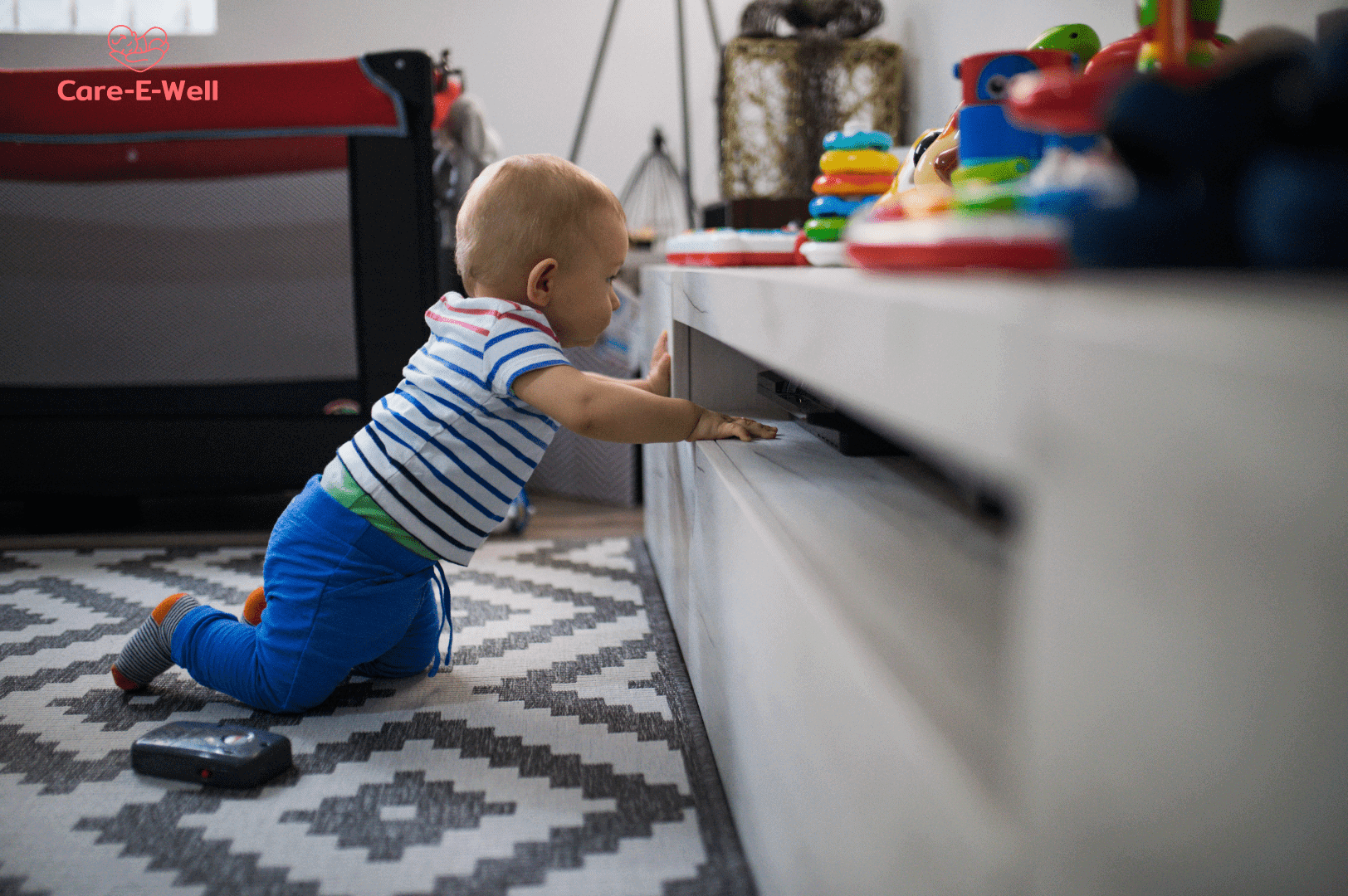
You should start babyproofing before your baby can independently reach the hazards you are trying to control. That usually means doing the foundational work during early infancy and completing mobility-related changes before rolling, reaching, crawling, scooting, pulling to stand or walking makes a new area accessible.
There is no single evidence-based age for babyproofing because motor development varies widely. Research on infant mobility shows that children take different routes toward independent movement, and studies of parent safety behaviour suggest that some families wait until crawling begins—when the child may already be able to reach the hazard. A better rule is simple: babyproof for the next skill, not only the skill your baby has today.
The safest time to fix a predictable hazard is before your child can reach it. Do not wait for a specific birthday or for crawling to begin.
Is there a recommended age to start babyproofing?
No universal age works for every baby. Developmental research shows substantial variation in how and when infants become mobile. Some crawl on hands and knees, some shuffle, roll or move in other ways, and some progress quickly toward pulling up and walking.
This matters because a calendar can create false reassurance. A baby who reaches, rolls or pivots earlier than expected may access cords, table edges or objects on the floor before the family has completed a planned “six-month” or “nine-month” safety project.
The practical approach is to prepare in stages. Start with hazards that matter regardless of mobility, then move through the home one developmental step ahead of the child.
Why waiting until crawling can be too late
Crawling often makes household risks much more obvious because the baby can suddenly travel across a room. But the first safety changes should happen before that point.
A study of first-time parents found that some safety behaviours increased only once infants started crawling, meaning parents sometimes responded after exposure had already changed. Other research specifically examining motor development and parent safety practices describes new motor skills as creating new opportunities for injury in the home.
Crawling is also not a universal checkpoint. Infants can reach hazards through rolling, bottom-shuffling, pulling forward, standing or other forms of movement. If your plan depends on seeing a classic hands-and-knees crawl first, your child may reach the hazard another way.
What should be babyproofed from the beginning?
Some safety measures are useful before a baby moves independently because the risk does not depend on crawling.
- keep medicines, vitamins and household chemicals securely stored
- keep button batteries and high-powered magnets inaccessible
- keep hot drinks and hot appliances away from a baby being held or carried
- keep cords away from the sleep space and changing area
- secure unstable furniture that could become a future tip-over hazard
- maintain functional smoke alarms and other relevant household alarms
- supervise babies directly around water
- keep small objects away from the floor and baby-care areas
Doing these jobs early has another advantage: you can make deliberate changes rather than rushing through the house after your baby unexpectedly gains a new skill.
If you suspect a child has swallowed a button battery or high-powered magnet, seek urgent medical assessment and do not wait for symptoms.
Stage 1: Early infancy — build the safety foundation
During the newborn and early-infant period, focus on the parts of home safety that do not require the baby to crawl.

Secure hazardous products, decide where medicines and batteries will live, check smoke alarms, identify unstable furniture and think about cords around feeding, changing and sleep areas. If there are stairs, balconies, accessible windows or a pool, plan the physical barriers you will need before mobility starts.
This is also a useful time to look at how adults move through the home while carrying the baby. Cluttered stairs, trailing cords, unstable rugs and crowded walking routes can create problems even when the baby is not independently mobile.
You do not need to complete every toddler-level lock on the first day home. The goal is to build the foundation and identify work that will take time, drilling or professional installation.
Stage 2: Before rolling and reaching — reassess surfaces and edges
The next shift often comes when a baby can reach farther, twist, roll or push with the legs. A baby who previously stayed where you placed them may suddenly move toward the edge of a surface or grab something nearby.
- keep one hand on the baby during changes on an elevated surface
- move hot drinks, cords and small objects farther from edges
- check what can be pulled down from a nearby table or shelf
- keep plastic bags, small parts and medication packaging out of reach
- look under sofas and furniture for dropped choking hazards
Reach can increase before parents think of the child as “mobile.” That is why waiting for crawling is not the best trigger for every safety change.
Stage 3: Before independent floor mobility — complete the major access barriers
Before your baby can move across the floor independently, complete the changes that protect areas they may reach quickly.
- install appropriate stair gates where needed
- secure cabinets containing hazardous products
- anchor furniture and televisions that could tip
- control access to windows and balconies
- remove reachable blind or curtain cords
- move choking hazards and older siblings’ small toys
- secure accessible electrical and appliance cords
- check low drawers and cupboards for sharp, heavy or hazardous items
This is the stage parents often picture when they hear “babyproofing.” It should ideally be completed before the baby is already travelling from room to room.
Safety equipment needs correct installation and periodic testing. A latch that no longer holds, a gate installed in the wrong location or an anchor that is not compatible with the wall does not provide the protection parents expect.
Stage 4: Before pulling to stand and cruising — think higher
Once a child can pull to stand, the hazard zone changes vertically. Objects that seemed safely above floor level may suddenly be within reach.
Recheck coffee tables, low shelves, television stands, windowsills, drawers and furniture handles. Move hot drinks, heavy objects, breakables and cords farther back.
Open drawers can become steps, and furniture that was never interesting while the baby crawled may become attractive once climbing begins. Anchoring and furniture placement therefore deserve another review at this stage.
Walking infants can access more distant objects and move through the environment differently from crawlers. Developmental studies show that the transition to walking expands how infants explore and interact with objects, which is exactly why the home safety plan must expand too.
Stage 5: Before walking and climbing — review exits and routes
Walking changes both speed and reach. A toddler may move from one room to another before an adult expects it, reach higher handles and begin experimenting with climbing.
- reassess exterior doors and gates
- check access to roads, stairs, balconies and water
- move furniture away from windows if it creates a climbing route
- review kitchen access and hot-surface risks
- keep chairs or boxes from becoming steps to hazards
- secure garden tools, chemicals and grills
- check whether the child can now operate previously effective latches
The goal is not to make the whole home inaccessible. Create safe areas for exploration while making high-consequence hazards physically difficult to reach.
What if your baby skips crawling?
Do not wait. Crawling is not required for every child’s path to walking, and developmental science describes substantial variation in prewalking mobility.
A baby may bottom-shuffle, roll, pull forward, cruise furniture or move rapidly from sitting to standing. Babyproof according to what the child can reach and what they are likely to do next, not according to whether a particular milestone appears.
If your baby suddenly begins pulling to stand before you expected it, immediately reassess furniture anchoring, windows, cords and anything reachable from a standing position.
Should you start babyproofing during pregnancy?
You can, especially for jobs that require planning, drilling, purchases or rearranging furniture. There is no medical requirement to finish every babyproofing task before birth, but completing the major structural jobs early can reduce pressure later.
During pregnancy, useful tasks include identifying stair and window needs, choosing secure storage for medicines and chemicals, anchoring unstable furniture and checking where button batteries, magnets and small objects are kept.
Leave room for reassessment after the baby arrives. The way your family actually uses rooms may differ from what you expected before birth.
Which babyproofing jobs should not wait?
Prioritise hazards by potential severity rather than by how likely they seem on an ordinary day.
- uncontrolled access to stairs
- open or accessible windows and balconies
- unstable furniture or televisions
- accessible medicines and toxic household products
- button batteries and high-powered magnets
- accessible water hazards
- hot liquids and burn risks
- choking hazards
- dangling or looped cords
Home injury-prevention research supports environmental modifications and safety equipment as part of a broader prevention strategy. These changes work best alongside supervision rather than instead of it.

Do safety devices replace supervision?
No. Gates, locks, anchors and guards reduce access to specific hazards, but no device makes a young child safe without appropriate supervision.
Devices can be left open, installed incorrectly, wear out or become solvable as a toddler develops. Treat them as layers in a safety system.
A useful habit is to test the home from the child’s perspective: pull the latch, check the gate, look for new climbing routes and ask what becomes reachable if the child stands on a toy or chair.
Good babyproofing creates time and distance between a child and a serious hazard. Supervision remains necessary even when the equipment works correctly.
How often should you update babyproofing?
Review the home whenever mobility changes and whenever the environment changes.
- Recheck when reaching and rolling increase.
- Recheck before independent floor mobility.
- Recheck when pulling to stand begins.
- Recheck when cruising or walking starts.
- Recheck when climbing and door-opening appear.
- Recheck after moving furniture or changing rooms.
- Recheck after holidays, visitors or older siblings bring new objects into the home.
- Test gates, locks, anchors and other devices periodically.
The safest setup is dynamic. A cupboard that was irrelevant to a crawler may become interesting to a climber, and a high shelf can stop being high once a chair becomes a step.
A simple babyproofing timeline
- Early infancy: secure medicines, chemicals, batteries, magnets and fixed household hazards.
- Before rolling and reaching: clear edges, changing areas and nearby cords.
- Before independent floor movement: complete stair, cabinet, furniture, window and low-level hazard controls.
- Before pulling to stand: move hazards higher and reassess furniture stability.
- Before walking: secure routes, exits and newly reachable areas.
- Before climbing: reassess everything from a higher reach and assume objects can become steps.
These stages are based on capability rather than exact months. That makes the timeline useful for babies who develop earlier, later or through a different sequence.
Frequently asked questions
When should you start babyproofing?
Start foundational safety work in early infancy and complete mobility-related protections before your baby can independently reach the hazard. Do not wait for a specific age or for crawling to begin.
Is six months the right age to babyproof?
Six months is not a universal threshold. Some babies reach or move earlier and others later. Use current abilities and the next likely motor skill rather than a birthday.
Should the house be fully babyproofed before the baby is born?
It does not have to be fully toddler-proof before birth, but pregnancy can be a convenient time for structural jobs such as furniture anchoring, storage changes and planning gates or window protection.
What if my baby suddenly starts crawling before I am ready?
Prioritise high-consequence hazards immediately: stairs, windows, furniture tip-over, medicines, chemicals, water, batteries, magnets, cords and choking hazards. Restrict access to unfinished areas until the safety changes are complete.
When can you stop babyproofing?
There is no single age. Reduce safety measures only when the child can reliably understand and follow the relevant safety rule and the physical hazard no longer requires a barrier. Some household protections remain sensible for years.
The key takeaway
When should you start babyproofing? Before your baby can reach the hazard. Begin foundational safety work during early infancy, complete major access barriers before independent mobility and reassess before standing, walking and climbing. Because development varies, capability is a better trigger than age. Babyproof one step ahead, test the protections you install and keep supervision as part of the safety system.
Sources and References
- van Beelen MEJ, Beirens TMJ, den Hertog P, et al. — First-Time Parents Are Not Well Enough Prepared for the Safety of Their Infant
- Morrongiello BA, Cox A — Motor development as a context for understanding parent safety practices
- Walle EA — Infant Social Development across the Transition from Crawling to Walking
- Schneider JL, Iverson JM — Cascades in action: How the transition to walking shapes caregiver communication during everyday interactions
- Hospodar CM, Adolph KE — The development of gait and mobility: Form and function in infant locomotion
- Kim YH, Lee E, Park J, et al. — Infant Home Safety Programs for Parents: A Systematic Review
- Roberts KJ, McAdams RJ, Kristel O, et al. — A Feasibility Study of the Make Safe Happen App, a Home Safety Mobile Technology Intervention for Parents
- McKenzie LB, Roberts KJ, Clark R, et al. — A randomized controlled trial to evaluate the Make Safe Happen app—a mobile technology-based safety behavior change intervention for increasing parents’ safety knowledge and actions
- Mack KA, Liller KD, Baldwin G, et al. — Preventing Unintentional Injuries in the Home Using the Health Impact Pyramid
- Storm KK, Van Dyk M, Van As AB — Infant injuries treated at Red Cross War Memorial Children’s Hospital, Cape Town, South Africa
Did this Insight help?
A little love for something worth reading.


