
Care-E-Well Insights
Why Does My Child Hold in Poop During Potty Training?
Why does my child hold in poop during potty training? Learn the pain-withholding cycle, what helps, and when to seek medical advice.
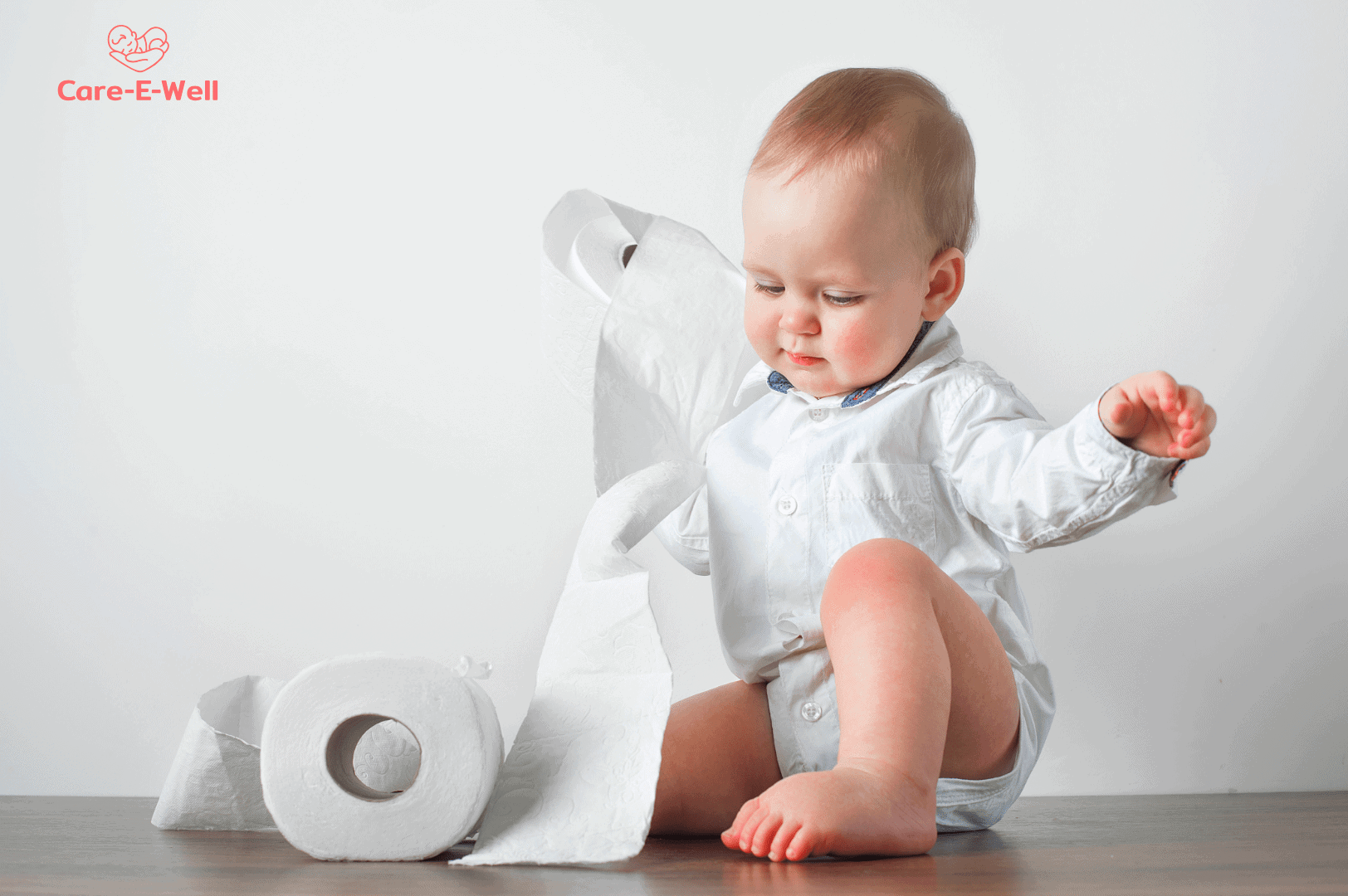
If your child holds in poop during potty training, the behaviour is usually protective rather than deliberately oppositional. A toddler may be trying to avoid a bowel movement because it hurt before, because the toilet feels unfamiliar, because they dislike the sensation of releasing without a diaper, or because they do not want to interrupt play.
The problem is that withholding can make the next bowel movement harder. Stool stays in the colon longer, more water is absorbed, and passing it may become more uncomfortable. That can create a cycle of pain, fear and further withholding.
Stool withholding is often a sign that pooping feels difficult or unsafe. The priority is comfortable bowel movements, not winning a toilet battle.
Why does my child hold in poop during potty training?
Potty training changes where, when and how a child is expected to have a bowel movement. For some toddlers, that transition is easy. Others discover that they can tighten the pelvic floor and buttock muscles to delay stool when the urge appears.
Withholding may begin after one painful or very large bowel movement. Research on childhood constipation has repeatedly identified painful defecation as an important trigger, and prospective toilet-training studies found that constipation and painful stooling can appear before stool-toileting refusal.
Other children are not obviously constipated at first. They may hide to poop, ask for a diaper, avoid unfamiliar bathrooms, resist sitting or become absorbed in play until the urge passes. These patterns can gradually contribute to retention.
What does stool withholding look like?
Withholding does not always look like a child simply saying, “I will not poop.” The physical signs can look strange because the child is actively trying to stop stool from coming out.
- stiffening the legs or whole body
- crossing the legs tightly
- standing on tiptoe
- squeezing the buttocks together
- rocking, twisting or appearing to “dance”
- hiding behind furniture or in another room
- becoming red-faced while apparently trying not to poop
- suddenly asking for a diaper
- refusing to sit when a bowel movement is approaching
- going several days between bowel movements
Parents sometimes mistake these postures for straining to pass stool. In many cases the child is doing the opposite: contracting muscles to keep stool in.
How the pain-withholding cycle develops
The bowel continually absorbs water from stool. When a child repeatedly delays defecation, stool may become larger, drier and harder to pass. A difficult bowel movement can then confirm the child's expectation that pooping hurts.
- A bowel movement is painful, frightening or otherwise unpleasant.
- The child notices the next urge and tightens muscles to avoid it.
- Stool remains in the bowel longer.
- The retained stool can become harder or larger.
- The next bowel movement may hurt more.
- The child becomes even more motivated to hold.
Over time, repeated retention can contribute to functional constipation. In some children, a stretched rectum can also make normal urge signals less reliable, so the child may seem unaware until stool is already difficult to hold.

Is withholding always caused by constipation?
No. Constipation and withholding often reinforce each other, but the first trigger can be behavioural, sensory, environmental or emotional. A child may dislike the toilet opening, fear the flush, feel unstable with dangling feet, or strongly prefer the familiar sensation of pooping in a diaper.
Stress can also influence bowel symptoms. A systematic review has found associations between psychological stress and functional constipation in children, although this does not mean stress is the sole cause in an individual child.
The practical approach is to look at both the bowel and the toileting environment rather than assuming a single explanation.
Why does my child hide to poop?
Hiding while defecating is a well-described behaviour during toilet learning. Research has associated it with stool withholding, constipation and stool-toileting refusal.
Hiding may provide privacy, preserve a familiar squatting or standing posture, reduce adult attention or allow the child to continue using a diaper. It can also be a clue that the child knows a bowel movement is coming but is not yet comfortable having it on the potty or toilet.
Avoid dragging a hiding child to the toilet in the middle of a bowel movement. That can increase tension and make future urges feel even more stressful. Instead, use the pattern as information and plan a calmer transition.
Make pooping physically easier
If your child uses an adult toilet, make sure the seat is stable and the feet have firm support. A child who is balancing or dangling may find it harder to relax.
A floor potty can be useful for some toddlers because the feet are naturally supported and the child can get on and off independently. There is no evidence that every child must use a potty chair, but the setup should feel secure.
Keep toilet sits brief and calm. Scheduled opportunities after meals can make use of normal post-meal bowel activity, but sitting should not become a prolonged test in which the child must produce stool before being allowed to leave.
What should I do if my child asks for a diaper to poop?
A diaper request can feel like regression, but it often means the child has found one situation in which they can relax enough to release stool. Abruptly refusing the diaper may lead some children to hold for longer.
First make sure bowel movements are comfortable. Then you can gradually change one part of the routine at a time: poop in the diaper in the bathroom, then while sitting on the potty with the diaper on, and later with the diaper loosened or adapted under professional guidance if needed.
Not every child needs this exact sequence. The principle is gradual transfer rather than forcing a leap from a familiar routine to one the child fears.
Keep the emotional pressure low
Repeated bargaining, pleading or celebrating every bowel movement intensely can make poop feel like a high-stakes family event. Use simple language and praise the steps the child can control.
- telling you they need to poop
- walking to the bathroom
- sitting willingly
- relaxing for a short period
- trying the toilet setup
- telling you after they have pooped
- helping with ordinary hygiene
Avoid punishment, ridicule or calling withholding naughty. A child who is afraid of pain will not become less afraid because an adult is more forceful.
The child controls the muscles involved in withholding, but the solution is not a contest of control. Make release easier, safer and less painful.
When does withholding become constipation?
Constipation is not defined only by how many days pass between bowel movements. Clinicians also consider stool consistency, pain, large stools, retention behaviours, fecal incontinence and findings from the history and examination.
Rome IV criteria are commonly used in research and clinical practice to define functional constipation, but parents do not need to diagnose it themselves. If your child repeatedly withholds, passes hard or painful stools, has very large bowel movements or begins soiling, discuss the pattern with a healthcare professional.
Early attention matters because once pain and retention are established, the cycle can become harder to reverse.
Seek medical advice promptly for persistent painful or hard stools, repeated withholding, blood in the stool, significant abdominal swelling, vomiting, poor growth, severe or persistent abdominal pain, or if your child seems unwell. Urgent assessment may be needed when symptoms are severe.
Does diet fix stool withholding?
An age-appropriate diet with fibre-containing foods and normal fluid intake supports bowel health, but withholding-driven constipation may not resolve through diet alone. Simply giving extra water is not a reliable treatment for established constipation.
Clinical guidelines for functional constipation commonly combine education and toilet routines with laxative therapy when indicated. Polyethylene glycol is widely used in guideline-based care, but the choice and dose of any medication should be discussed with an appropriate healthcare professional for the individual child.
Do not stop treatment as soon as one soft stool appears if a clinician has recommended an ongoing plan. The bowel may need time to recover from a period of retention.

A practical plan for a child who is withholding
- Observe the child's withholding signs and usual bowel pattern.
- Check whether bowel movements are hard, large or painful.
- Make the potty or toilet physically stable and comfortable.
- Reduce pressure, punishment and repeated demands.
- Offer calm toilet opportunities at predictable times, especially after meals if that fits the child's pattern.
- Let the child leave after a brief sit if nothing happens.
- If a diaper is the only way the child will poop, avoid an abrupt showdown while you address comfort and plan a gradual transition.
- Seek medical advice when constipation, pain or persistent withholding is present.
- Follow the treatment plan long enough to restore consistently comfortable bowel movements.
Improvement is often gradual. A child may stop hiding before they begin pooping in the toilet, or they may accept sitting before they can release there. Those smaller changes can be useful signs that fear is decreasing.
Frequently asked questions
Is my child holding poop on purpose?
The child is actively using muscles to delay stool, but the reason is usually protective: pain, fear, sensory discomfort, preference for a diaper or reluctance to interrupt an activity. Treat the cause rather than framing the behaviour as deliberate misbehaviour.
How long can a toddler hold poop?
There is no safe target number of days to wait for a withholding toddler. If your child is repeatedly delaying bowel movements, especially with hard stools or pain, seek healthcare guidance rather than waiting for a specific day count.
Should I make my child sit until they poop?
No. Prolonged forced sitting can increase tension and conflict. Offer brief, predictable opportunities and focus on restoring comfortable bowel movements.
Can withholding cause poop accidents?
Yes. With significant retention, softer stool can sometimes leak around retained stool, leading to fecal soiling. This is not necessarily intentional and should prompt assessment for constipation.
Will stool withholding stop when potty training stops?
Sometimes reducing toilet pressure helps, but withholding can continue if constipation or fear has developed. A pause in active training should be combined with attention to comfortable bowel function.
The key takeaway
When you ask why does my child hold in poop during potty training, think first about pain, fear and learned avoidance. Withholding can make stool harder and reinforce the problem, so the most effective direction is usually to restore comfortable bowel movements, reduce pressure and help the child transfer to the toilet gradually.
Sources and References
- Blum NJ, Taubman B, Nemeth NM — During Toilet Training, Constipation Occurs Before Stool Toileting Refusal
- Taubman B — Toilet Training and Toileting Refusal for Stool Only: A Prospective Study
- Taubman B, Blum NJ, Nemeth NM — Children Who Hide While Defecating Before They Have Completed Toilet Training
- Borowitz SM, Cox DJ, Tam A, et al. — Precipitants of Constipation During Early Childhood
- Rajindrajith S, Devanarayana NM, Benninga MA — Childhood constipation: Current status, challenges, and future perspectives
- Tabbers MM, DiLorenzo C, Berger MY, et al. — Evaluation and treatment of functional constipation in infants and children: evidence-based recommendations from ESPGHAN and NASPGHAN
- Gozali FS, Febiana B, Hegar B, et al. — Relationship between psychological stress with functional constipation in children: a systematic review
- Köstekçi YE, Başkan S, Topçu S, et al. — Evaluation of the effects of the toilet training process on the children's quality of life
- Kiddoo D — Toilet training children: when to start and how to train
- de Morais MB — Prevention of pediatric functional constipation: a narrative review
Did this Insight help?
A little love for something worth reading.


