
Care-E-Well Insights
Yeast Diaper Rash vs Irritant Rash: How They Differ
Yeast diaper rash vs irritant rash can look similar. Learn the clues, basic skin care and when a persistent rash needs assessment.
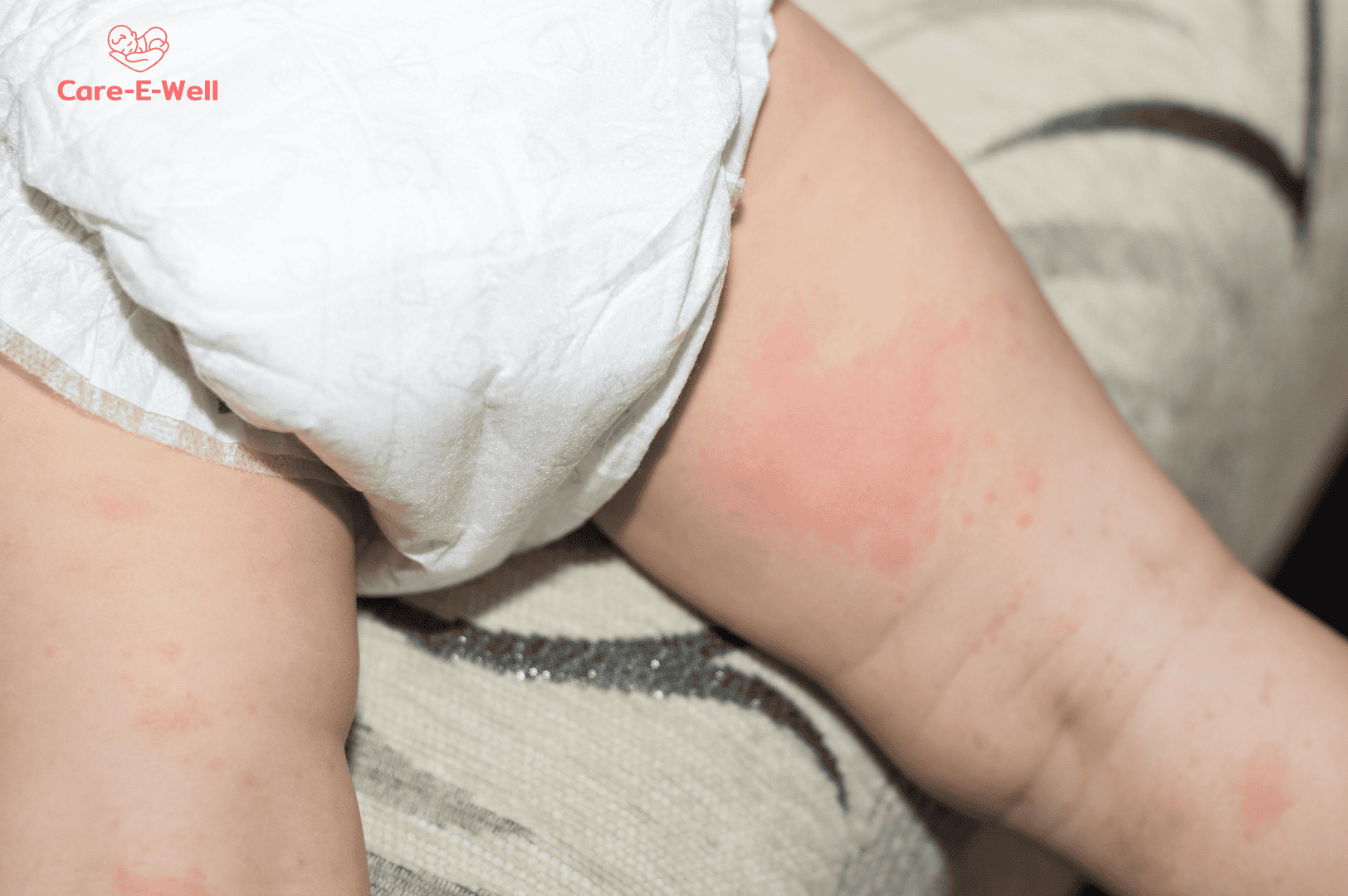
Yeast diaper rash vs irritant rash can look similar at first, which is why colour alone is not a reliable way to diagnose the cause. Irritant diaper rash is usually linked to moisture, stool and friction. A yeast rash is a fungal skin infection, most often involving Candida, and may develop when the warm, moist diaper environment allows yeast to overgrow.
Parents can use the pattern as a clue, but not as a home diagnostic test. A rash that is mild and improves quickly with frequent changes, gentle cleaning and barrier protection is more consistent with simple irritation. A rash that is persistent, unusually intense, spreading into skin folds or not improving with basic care deserves professional assessment because fungal infection or another skin condition may be involved.
The practical difference is not simply “red versus redder.” Look at the rash pattern, what triggered it, whether the skin folds are involved and whether simple irritant care is helping.
What is irritant diaper rash?
Irritant diaper rash develops when the skin barrier is repeatedly exposed to moisture, stool, friction and cleaning. Stool is particularly irritating, and diarrhoea can make the problem worse because the skin is exposed more often and needs more frequent cleaning.
Tight diapers can increase rubbing and pressure. A very loose diaper can leak and spread urine or stool over a wider area. Repeated wiping, fragranced products or a cleanser that stings already-inflamed skin may add to irritation.
The first-line approach is therefore simple: change stool promptly, avoid leaving the skin very wet for long periods, clean gently, pat dry and use a straightforward barrier product when useful.
What is a yeast diaper rash?
A yeast diaper rash is a fungal skin infection, usually related to Candida species. WHO describes candidiasis as a fungal infection that can affect the skin and notes that moist body areas favour yeast overgrowth.
Candida can be present without causing disease. Problems arise when the local environment allows excessive growth or when the skin barrier is already damaged. A prolonged irritant rash, frequent diarrhoea, recent antibiotic exposure or another change in the skin environment can make fungal involvement more plausible, although none of these proves the diagnosis.
Because antifungal treatment only helps when a fungal cause is present, parents should avoid treating every persistent red rash as yeast.

How can yeast diaper rash and irritant rash look different?
Clinicians consider the distribution, border, skin folds and smaller surrounding spots when assessing a diaper-area rash. Irritant dermatitis often affects the skin that has the most direct contact with the diaper, while deeper folds may be relatively less involved. Candida can involve folds more prominently and may produce smaller red spots beyond the main rash.
These are useful clinical clues, not guarantees. Irritation can extend into folds when severe, and fungal rashes can vary. Skin tone also changes how redness appears.
Fold involvement or small surrounding spots can raise suspicion for yeast, but no single visual feature proves Candida.
Does a bright red rash automatically mean yeast?
No. Intense redness can occur with severe irritation, friction, contact reactions, bacterial infection and other inflammatory skin conditions.
The colour also looks different across skin tones. On darker skin, inflammation may appear deep red, purple, brown or simply darker than the surrounding skin rather than bright pink.
If a rash is persistent or unusually painful, diagnosis should be based on the whole clinical picture rather than colour alone.
What usually triggers irritant diaper rash?
- prolonged moisture contact
- stool left against the skin
- frequent loose stools or diarrhoea
- friction from tight elastic or repeated wiping
- leaks that spread urine or stool
- a sudden increase in stool frequency
- a new wipe, cleanser or fragranced product that irritates the skin
Newborn-care guidance from WHO and UNICEF consistently emphasizes hygienic skin care, handwashing, keeping babies clean and monitoring for signs that a newborn is unwell.
What can make yeast involvement more likely?
Candida grows well in warm, moist environments. A rash that has persisted despite reducing moisture and friction may create conditions in which yeast can become a secondary problem.
Antibiotics can also alter normal microbial balance. WHO notes that antibiotic exposure can contribute to Candida overgrowth in other common forms of candidiasis. This does not mean that a baby who has taken antibiotics will develop a yeast diaper rash, only that the context can matter.
Babies who are medically fragile, immunocompromised or dealing with another infection need individualized medical assessment rather than home pattern-matching.
Can a baby have both irritant rash and yeast at the same time?
Yes. The categories are not always completely separate. Irritation can damage the skin barrier, and a secondary fungal infection can then complicate the rash.
This is one reason a rash that initially looked like ordinary diaper irritation may stop improving with simple care. It does not mean every stubborn rash is Candida, but it is a reason to seek assessment.
How should you care for a mild rash while you are unsure?
- Change stool as soon as practical.
- Check wet diapers more frequently while the skin is sore.
- Clean with water and a soft cloth or a well-tolerated wipe.
- Avoid repeated rubbing and scrubbing.
- Pat the skin dry.
- Check whether the diaper is too tight, leaking or creating friction.
- Use a simple barrier ointment if appropriate for your baby.
- Stop any new product that appears to make the rash worse.
- Watch whether the rash is clearly improving.
This approach is appropriate for uncomplicated irritant care and does not interfere with later assessment if the rash fails to improve.
Should you use antifungal cream just in case?
Not routinely. WHO notes that candidiasis is treated with antifungal medicines, but treatment should match the diagnosis. An antifungal will not correct moisture damage, friction, eczema, bacterial infection or a contact reaction.
If a clinician confirms or strongly suspects a fungal rash, use the antifungal product and duration they recommend. Avoid using leftover medication from a previous rash or another child.
What about steroid cream?
Do not routinely apply a steroid cream to a baby's diaper area without appropriate professional guidance. The diaper creates an occlusive environment, and skin in the groin and genital area can absorb topical medicines differently from uncovered skin.
A clinician may sometimes recommend a carefully selected topical medicine, but product strength, amount and duration matter.
Can barrier cream help both types?
Barrier products can reduce contact between skin and urine or stool, so they remain useful when irritation is part of the problem. They do not kill Candida and should not be presented as a stand-alone treatment for a confirmed fungal infection.
If a prescribed antifungal is being used, follow the clinician's instructions about how to combine it with a barrier product rather than layering several products at random.
Does diaper-free time help?
Brief diaper-free periods can reduce moisture and friction and may make irritated skin more comfortable. Keep the baby warm and supervised on a safe, easy-to-clean surface.
This is supportive care, not a diagnostic test. A rash improving with air exposure does not prove it was irritant, and a fungal rash can also feel better when moisture is reduced.

When should you suspect something other than ordinary diaper rash?
Consider professional assessment when the rash is not improving, repeatedly returns, spreads beyond the diaper area, causes significant pain or has blisters, open sores, pus, crusting or marked swelling.
Other skin conditions can affect the diaper area and may resemble irritant or fungal dermatitis. A clinician can assess whether treatment needs to change.
Seek prompt medical advice if a baby has a severe or rapidly worsening rash, fever, poor feeding, unusual sleepiness, reduced activity, blisters, open sores, pus, significant swelling or appears generally unwell. Use a particularly low threshold for assessment in a newborn.
What if the rash appears during diarrhoea?
Protecting the skin is important, but hydration comes first. WHO identifies dehydration as a major danger of diarrhoeal illness in young children.
Continue age-appropriate feeding, change stool promptly and monitor wet diapers. Repeated watery stools with reduced urine, vomiting, poor feeding, blood in the stool or unusual sleepiness need medical advice.
What if the baby also has oral thrush?
WHO notes that oral candidiasis is common in babies, especially newborns. White patches in the mouth that do not wipe away easily can be a sign of thrush and may need assessment and treatment.
Oral thrush plus a persistent diaper-area rash can make Candida more plausible, but the diaper rash should still be assessed on its own features rather than assumed to have the same cause.
Frequently asked questions
Is yeast diaper rash contagious?
Candida commonly lives on human skin and mucosal surfaces, so the issue is usually overgrowth rather than a simple contagious exposure. Good hand hygiene during diaper care is still important.
Can ordinary diaper rash turn into yeast?
Irritated, moist skin can become secondarily infected, including by fungi. A rash that stops improving or changes pattern should be reassessed.
Do antibiotics cause yeast diaper rash?
Antibiotics can alter microbial balance and may make Candida overgrowth more likely, but they do not guarantee a fungal rash.
Can I diagnose yeast from satellite spots?
Small spots beyond a main rash can support clinical suspicion, but they are not definitive. Persistent or atypical rash should be assessed.
What is the safest first step if I am unsure?
Reduce moisture, stool contact and friction, use gentle cleansing, and seek professional advice if the rash is significant or not clearly improving.
The key takeaway
Yeast diaper rash vs irritant rash is best understood as fungal infection versus skin-barrier irritation, but the two can overlap. Irritant rash often responds to prompt changes, gentle cleaning, drying and barrier protection. Candida becomes more plausible when a rash persists, involves moist folds or develops a different pattern despite basic care. Do not rely on colour alone or treat every stubborn rash with antifungal medication. When the rash is severe, persistent or associated with an unwell baby, professional assessment is the safest next step.
Sources and References
- World Health Organization — Candidiasis (yeast infection)
- World Health Organization — Caring for a newborn
- World Health Organization Regional Office for Europe — Newborn health
- World Health Organization — Essential newborn care
- World Health Organization — WHO recommendations on maternal and newborn care for a positive postnatal experience
- World Health Organization — Keeping newborns and children under 5 years clean and safe
- UNICEF Parenting — Newborn baby health: Mini Parenting Master Class
- UNICEF Parenting — Newborn health warning signs
- UNICEF Uruguay — Cuidados del recién nacido: 10 consejos
Did this Insight help?
A little love for something worth reading.


