Formula feeding0–12 months
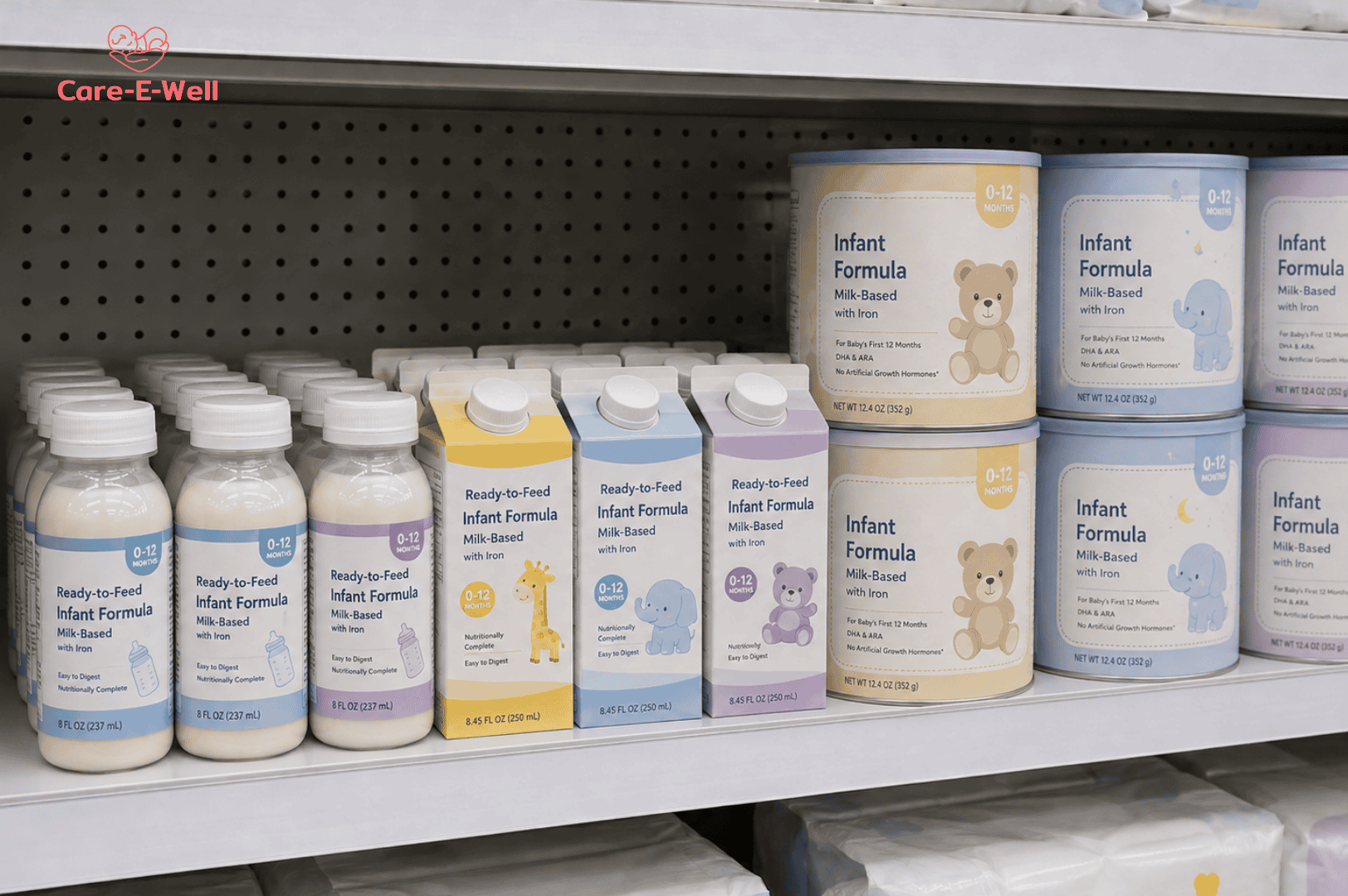
Ready-to-Feed vs Powder Formula: Pros, Cons and Safety
Ready-to-feed vs powder formula: compare safety, preparation, convenience, storage and cost so you can choose confidently for your baby.

Care-E-Well Insights
Practical articles for every stage of parenting. Explore trusted guidance by topic and age, at your own pace.
Choose topics and ages, or search for what’s on your mind.
Ready-to-feed vs powder formula: compare safety, preparation, convenience, storage and cost so you can choose confidently for your baby.
Prepared formula should not sit out beyond safe limits. Learn WHO's two-hour rule, when to discard leftovers and when refrigeration applies.
You can refrigerate prepared formula safely at 5°C or below for up to 24 hours. Learn cooling, warming and leftover rules.
Anti-reflux formula may reduce troublesome spit-up in some babies. Learn when it helps, how it works and which reflux signs need review.
Hypoallergenic formula types differ. Learn what extensively hydrolysed, amino-acid, comfort and rice formulas mean for babies.
Lactose-free formula is useful in specific conditions, not routine gas or colic. Learn when babies need it and how it differs from allergy.
Cow's milk protein allergy can cause immediate or delayed symptoms. Learn the signs, how diagnosis works and which formulas are appropriate.
Baby refuses the bottle? Learn common causes, low-pressure solutions, flow checks and the signs that feeding refusal needs medical review.
Formula-fed baby poop can be green, yellow or brown. Learn normal texture, frequency, constipation clues and stool colours that need review.